Encyclopedia › Plants of the Bible
Plants of the Bible
Pistachio
Hebrew botnim · KJV “nuts” · Pistacia vera or the terebinth’s nuts · named only once
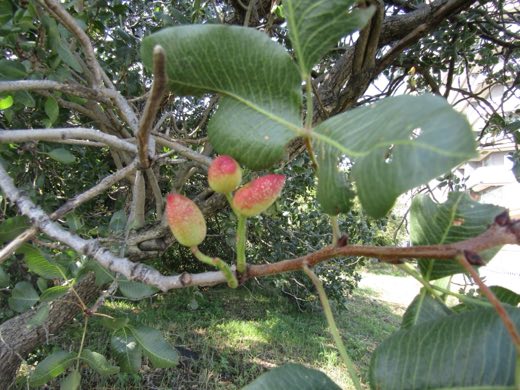
When the famine forced Jacob to send his sons back to Egypt, he told them to take “the best products of the land” as a gift for the governor: balm, honey, spices, myrrh, “pistachios and almonds” (Genesis 43:11). This is the only time the Hebrew botnim appears, and scholars disagree about which nuts it means. By one view they were true pistachios, from a small tree of Iran and Central Asia with hard-shelled, oily green kernels; the tree grows wild in Iran, and its nuts could have reached Canaan by trade.
By another view they were the small round nuts of the terebinth, the tree’s close relative, which is native to the land and grows on its hills. Terebinth nuts are smaller but can be eaten fresh or roasted and are still sold in markets of the region. Either way, nuts were a valued food that kept well and traveled easily, fit to be a gift. A town in Gad east of the Jordan, Betonim, probably took its name from the same word.
In nature
Named after plants
All verses with this plant (1)
Where the Hebrew, Aramaic or Greek word for it stands in the text.
Genesis1
Then their father Israel said to them, “If it must be so, then do this: Put some of the best products of the land in your packs and carry them down as a gift for the man—a little balm and a little honey, spices and myrrh, pistachios and almonds.See also
- Almond treePlants of the Bible
- TerebinthPlants of the Bible
- WalnutPlants of the Bible
- Gum and ladanum of the caravansPlants of the Bible
- Fruit and nutsFood and drink
Sources: Tyndale Open Bible Dictionary © 2023 Tyndale House Publishers, CC BY-SA 4.0 — adapted and shortened; the original work is available for free at tyndaleopenresources.com · Plants and Trees in the Bible © United Bible Societies 2025, adapted from R. Koops, Each According to its Kind © 2012 UBS, CC BY-SA 4.0 · Sources and rights