Encyclopedia › Plants of the Bible
Plants of the Bible
Sycamore-fig
Hebrew shiqmah · Greek sykomorea · KJV “sycomore” · Ficus sycomorus, not the American sycamore
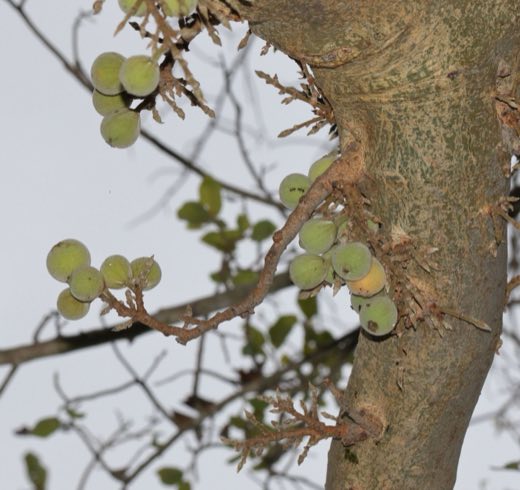
The sycamore of the Bible is a kind of fig tree, not the plane tree that English speakers call sycamore today. It grows into a wide, sturdy tree about ten to twelve meters tall, with low spreading branches, and it was common in Egypt and in the warm lowlands of Israel — the coastal plain, the foothills and the Jordan Valley. Its figs grow in bunches right on the trunk and older branches, not among the leaves. They are smaller and less sweet than common figs, so they were the fruit of ordinary people.
The trees were valuable enough that King David put an officer in charge of the olive and sycamore trees of the foothills. The prophet Amos called himself a tender of sycamore-figs: growers nicked each young fruit so that it would ripen faster and sweeter, a practice still known in Egypt. The wood was used for building, and in Egypt for coffins. Its low branches were easy to climb. In Jericho the tax collector Zacchaeus, a short man, ran ahead and climbed one to see Jesus over the crowd, and Jesus, coming to the place, looked up and said, “Zacchaeus, hurry down, for I must stay at your house today” (Luke 19:3–5).
In nature
In art
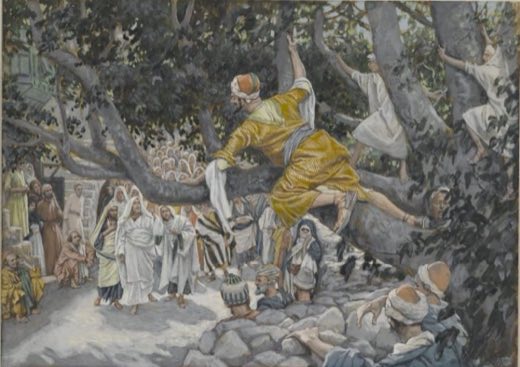 Zacchaeus in the Sycamore Awaiting the Passage of Jesus (Zachée sur le sycomore attendant le passage de Jésus)
Key verses
The king made silver as common in Jerusalem as stones, and cedar as abundant as sycamore in the foothills.Baal-hanan the Gederite was in charge of the olive and sycamore trees in the foothills. Joash was in charge of the stores of olive oil.He killed their vines with hailstones and their sycamore-figs with sleet.“The bricks have fallen, but we will rebuild with finished stone; the sycamores have been felled, but we will replace them with cedars.”So he ran on ahead and climbed a sycamore tree to see Him, since Jesus was about to pass that way.All verses with this plant (8)
Where the Hebrew, Aramaic or Greek word for it stands in the text.
1 Kings1
The king made silver as common in Jerusalem as stones, and cedar as abundant as sycamore in the foothills.1 Chronicles1
Baal-hanan the Gederite was in charge of the olive and sycamore trees in the foothills. Joash was in charge of the stores of olive oil.2 Chronicles2
The king made silver and gold as common in Jerusalem as stones, and cedar as abundant as sycamore in the foothills.The king made silver as common in Jerusalem as stones, and cedar as abundant as sycamore in the foothills.Psalms1
He killed their vines with hailstones and their sycamore-figs with sleet.Isaiah1
“The bricks have fallen, but we will rebuild with finished stone; the sycamores have been felled, but we will replace them with cedars.”Amos1
“I was not a prophet,” Amos replied, “nor was I the son of a prophet; rather, I was a herdsman and a tender of sycamore-fig trees.Luke1
So he ran on ahead and climbed a sycamore tree to see Him, since Jesus was about to pass that way.See also
- Mulberry and balsam treesPlants of the Bible
- Fig treePlants of the Bible
- The Shephelah: the lowland between hills and coastThe land of the Bible
- Kings and their lands: David, Uzziah and Naboth’s vineyardField, orchard and water
- Called from the field: Gideon, Saul, Elisha and AmosField, orchard and water
- Timber: beams, rafters and panelingBuildings and structures
- PlacesExplore · How it looked in the 1890s
Sources: Tyndale Open Bible Dictionary © 2023 Tyndale House Publishers, CC BY-SA 4.0 — adapted and shortened; the original work is available for free at tyndaleopenresources.com · Plants and Trees in the Bible © United Bible Societies 2025, adapted from R. Koops, Each According to its Kind © 2012 UBS, CC BY-SA 4.0 · Sources and rights