Encyclopedia › Plants of the Bible
Plants of the Bible
Mulberry and balsam trees
Greek sykaminos · Hebrew bakha’ · KJV “sycamine”, “mulberry trees” · black mulberry or other trees
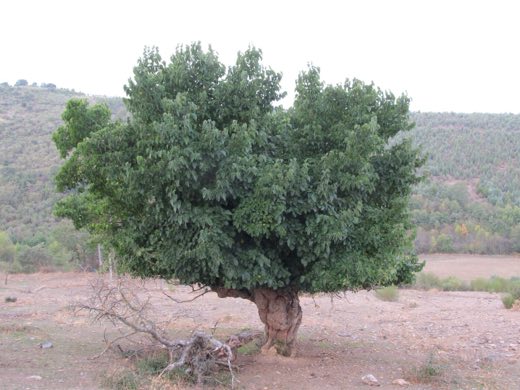
Jesus said that faith the size of a mustard seed could tell “this mulberry tree” to be uprooted and planted in the sea (Luke 17:6). The Greek sykaminos usually means the black mulberry, a broad, low tree about six meters tall with rough, heart-shaped leaves and dark red berries that stain whatever they touch. Its roots are deep and strong, and old trees live for centuries. The black mulberry probably came to the land from Persia, and it was grown in gardens for its fruit. Some think the word in Luke meant the sycamore-fig instead.
In one of David’s battles against the Philistines in the Valley of Rephaim, he was told to wait until he heard “the sound of marching in the tops of the balsam trees” (2 Samuel 5:24). The Hebrew bakha’im appears only here and in Chronicles; the King James Version called them mulberry trees, newer Bibles say balsam trees, and some suggest poplars or another tree whose leaves rustle in the wind. No one knows for sure.
In nature
All verses with this plant (2)
Where the Hebrew, Aramaic or Greek word for it stands in the text.
Isaiah1
To one bereft of an offering who chooses wood that will not rot, who seeks a skilled craftsman to set up an idol that will not topple?Luke1
And the Lord answered, “If you have faith the size of a mustard seed, you can say to this mulberry tree, ‘Be uprooted and planted in the sea,’ and it will obey you.See also
- Sycamore-figPlants of the Bible
- Willow and poplarPlants of the Bible
- Plant names in old and new BiblesPlants of the Bible
- PlacesExplore · How it looked in the 1890s
Sources: Tyndale Open Bible Dictionary © 2023 Tyndale House Publishers, CC BY-SA 4.0 — adapted and shortened; the original work is available for free at tyndaleopenresources.com · Plants and Trees in the Bible © United Bible Societies 2025, adapted from R. Koops, Each According to its Kind © 2012 UBS, CC BY-SA 4.0 · Sources and rights