Encyclopedia › Money and measures
Money and measures
Jewish coins from the Persians to Bar Kokhba
Yehud coins · Hasmonean bronze · revolt shekels “Jerusalem the holy” · Rome’s “Judaea capta”
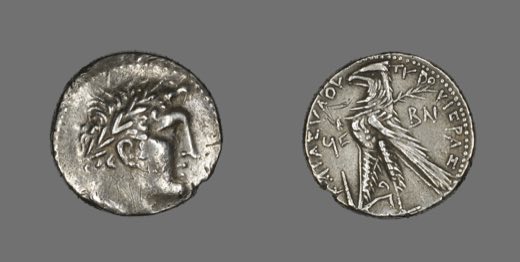
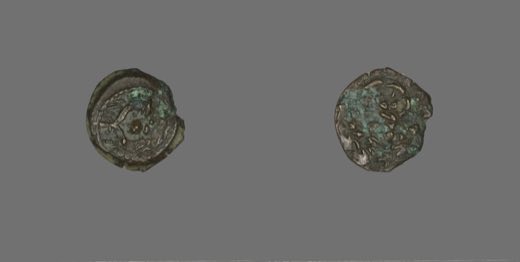
The first coins struck in Judea itself were tiny silver pieces of the Persian province of Yehud, in the 4th century BC, inscribed with its name in Hebrew letters. Two centuries later the Hasmonean rulers, from John Hyrcanus I (134–104 BC), struck small bronze coins with an inscription in the old Hebrew script — the name of the high priest and “the council of the Jews” — and emblems instead of faces: two horns of plenty with a pomegranate, an anchor, a star. Like Herod and most of his sons after them, they kept the Law’s ban on images: “You shall not make for yourself an idol in the form of anything” (Exodus 20:4). Such small bronzes were the widow’s “two small copper coins” in the temple (Mark 12:42).
In the revolt of AD 66–70 the rebels struck their own silver for the first time: shekels and half-shekels with a cup and a stem of three pomegranates, inscribed “Shekel of Israel” and “Jerusalem the holy”, dated year one to year five. Collectors once thought them coins of Simon Maccabeus; finds have shown they belong to the revolt. After the war Vespasian and Titus struck coins with a mourning woman under a palm tree and the words “Judaea capta”, “Judea taken”. In the Bar Kokhba revolt of AD 132–135 the rebels struck over Roman coins with the front of the temple and “For the freedom of Jerusalem”.
See also
- Coins in Roman JudeaJewish groups and the Roman world
- The widow’s mite (lepton)Money and measures
- The HasmoneansRulers around the Bible
- The Jewish War and the fall of Jerusalem, AD 66–70Weapons and warfare
- The Bar Kokhba revolt, AD 132–135Weapons and warfare
- Drachma, didrachma and staterMoney and measures
- Tattenai, Sanballat and the Persian governorsRulers around the Bible
Sources: Tyndale Open Bible Dictionary © 2023 Tyndale House Publishers, CC BY-SA 4.0 — adapted and shortened; the original work is available for free at tyndaleopenresources.com · Sources and rights