Encyclopedia › Weapons and warfare
Weapons and warfare
The Jewish War and the fall of Jerusalem, AD 66–70
Revolt of AD 66 · Vespasian in Galilee, 67 · Titus besieges Jerusalem, 70 · temple burned
In AD 66 the governor Florus took money from the temple treasury, riots followed, and the sacrifices offered for the emperor were stopped — an open break with Rome. The governor of Syria, Cestius Gallus, marched on Jerusalem but withdrew and was beaten in the pass of Beth-horon. Nero sent Vespasian, who in 67 won back Galilee: Josephus, then a Jewish commander, was captured at Jotapata, and the hill town of Gamla fell after a siege. In 69 Vespasian became emperor, and his son Titus took over the war.
Titus came before Jerusalem near Passover in AD 70 with four legions. Rival factions held different parts of the city and joined only to defend it. The Romans broke through the outer walls one after another, ringed the city with a wall of their own to cut off food, took the fortress Antonia and, in August, burned the temple; a month later the upper city fell. Excavators have found the “Burnt House” in the Jewish Quarter and stones of the temple platform where they fell on the street below. The Arch of Titus in Rome shows the temple’s lampstand carried in triumph, and Josephus’s Jewish War tells the whole story.
In art
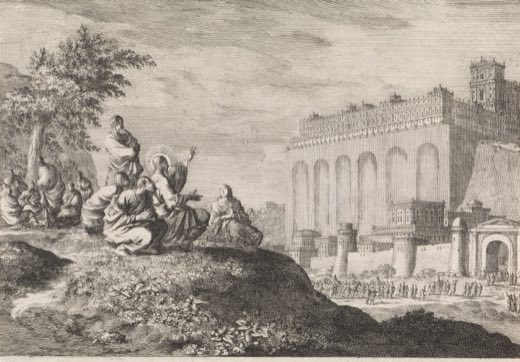 Jesus Looks at the Temple
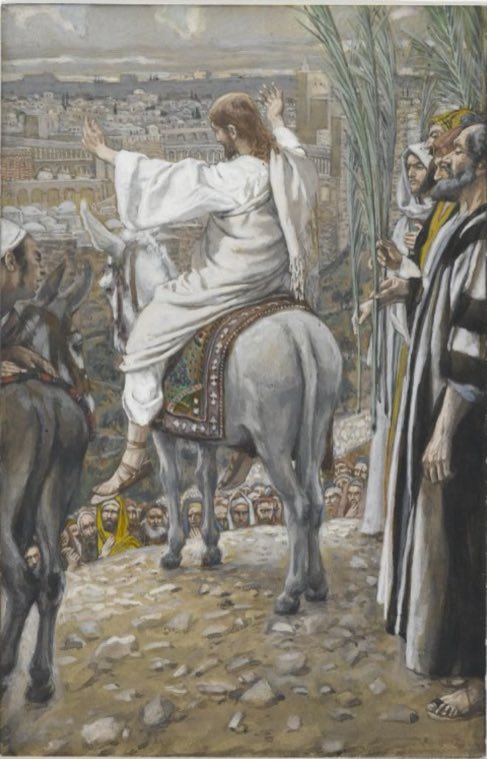 The Lord Wept (Le Seigneur pleura)
Key verses
As Jesus was leaving the temple, one of His disciples said to Him, “Teacher, look at the magnificent stones and buildings!”“Do you see all these great buildings?” Jesus replied. “Not one stone here will be left on another; every one will be thrown down.”For the days will come upon you when your enemies will barricade you and surround you and hem you in on every side.But when you see Jerusalem surrounded by armies, you will know that her desolation is near.See also
- Herod’s templeTabernacle and temple
- Zealots and sicariiJewish groups and the Roman world
- MasadaWeapons and warfare
- How the Romans besieged a cityWeapons and warfare
- Golden lampstandTabernacle and temple
- The Bar Kokhba revolt, AD 132–135Weapons and warfare
- Josephus and his booksAncient texts beside the Bible
- Tacitus on Nero and the ChristiansAncient texts beside the Bible
- The fasts for the fall of JerusalemFeasts and festivals
- Mara bar Serapion and the “wise king”Ancient texts beside the Bible
- Jewish coins from the Persians to Bar KokhbaMoney and measures
- The last governors of Judea before the revoltRulers around the Bible
- Vespasian and TitusRulers around the Bible
- JerusalemPlaces
- Beth-horonPlaces
- The Wars of the JewsAudiobooks · Flavius Josephus
Sources: Tyndale Open Bible Dictionary © 2023 Tyndale House Publishers, CC BY-SA 4.0 — adapted and shortened; the original work is available for free at tyndaleopenresources.com · Sources and rights