Encyclopedia › Money and measures
Money and measures
Money changers and bankers
Greek kollybistēs, trapezitēs · trapeza, “table”, also “bank” · changing coins for the temple tax
Roman, Greek, Tyrian and local coins all passed through Judea in Jesus’ day, and changers swapped one for another, for a fee. The money changer sat at a small table, trapeza in Greek, with his scales and coins. His busiest season came before Passover, when Jews from many lands paid the half-shekel temple tax in the one coin the temple accepted, the silver of Tyre. According to the Mishnah, the changers set up their tables in the towns of the land a month before the feast and in the temple itself ten days later.
So the tables Jesus overturned in the temple courts were those of the money changers, together with the seats of the dove sellers (Matthew 21:12); John adds that he poured out their coins (John 2:15). The same Greek word for a table also meant a bank, as English “bank” comes from Italian banco, “bench”: in the parable the master asks why his money was not put “in the bank” to earn interest (Luke 19:23). The Law of Moses forbade charging interest to a poor fellow Israelite (Exodus 22:25), but in the Greek and Roman world bankers took deposits and lent them out at interest.
In art
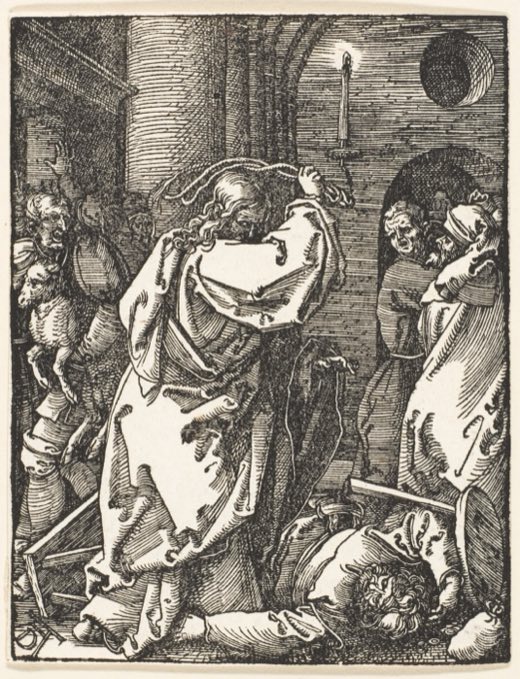 Christ Expelling the Money LendersAlbrecht Dürer
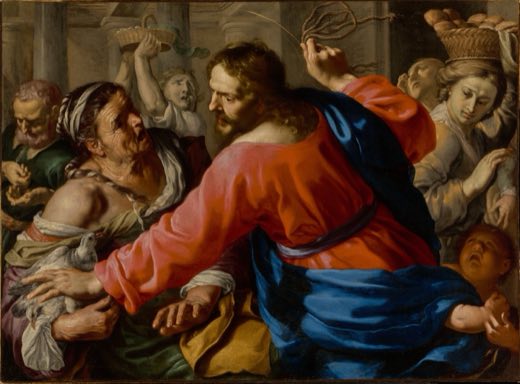 Christ Cleansing the TempleBernardino Mei
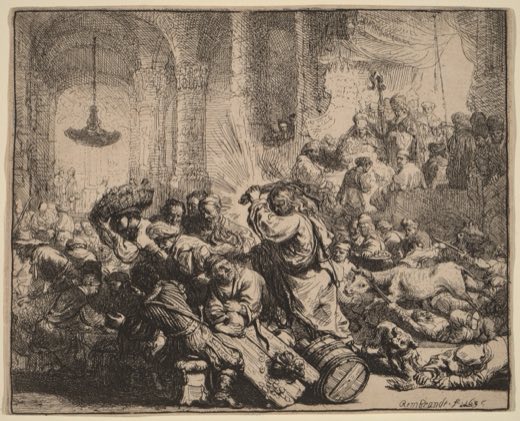 Christ Driving the Money Changers from the TempleRembrandt
Key verses
Then Jesus entered the temple courts and drove out all who were buying and selling there. He overturned the tables of the money changers and the seats of those selling doves.So He made a whip out of cords and drove all from the temple courts, both sheep and cattle. He poured out the coins of the money changers and overturned their tables.Why then did you not deposit my money in the bank, and upon my return I could have collected it with interest?’If you lend money to one of My people among you who is poor, you must not act as a creditor to him; you are not to charge him interest.All verses that name it (4)
Where the Hebrew, Aramaic or Greek word for it stands in the text.
Matthew1
Then Jesus entered the temple courts and drove out all who were buying and selling there. He overturned the tables of the money changers and the seats of those selling doves.Mark1
When they arrived in Jerusalem, Jesus entered the temple courts and began to drive out those who were buying and selling there. He overturned the tables of the money changers and the seats of those selling doves.Luke1
Why then did you not deposit my money in the bank, and upon my return I could have collected it with interest?’John1
So He made a whip out of cords and drove all from the temple courts, both sheep and cattle. He poured out the coins of the money changers and overturned their tables.All verses on this topic
See also
- Drachma, didrachma and staterMoney and measures
- ShekelMoney and measures
- Coins in Roman JudeaJewish groups and the Roman world
- Loans, pledges and interestTrade, craft and color
- Debts, loans and pledgesHuman life in Bible times
- The temple taxTabernacle and temple
- Thirty pieces of silverMoney and measures
Sources: Tyndale Open Bible Dictionary © 2023 Tyndale House Publishers, CC BY-SA 4.0 — adapted and shortened; the original work is available for free at tyndaleopenresources.com · Human-made Things in the Bible © United Bible Societies 2025, adapted from R. Pritz, The Works of Their Hands: Man-made Things in the Bible © 2009 UBS, CC BY-SA 4.0 · Sources and rights