Encyclopedia › Jewish groups and the Roman world
Jewish groups and the Roman world
Coins in Roman Judea
Imperial silver, Tyrian shekels, local bronze · no portraits on Herod’s coins · Pilate’s coins, AD 29–31
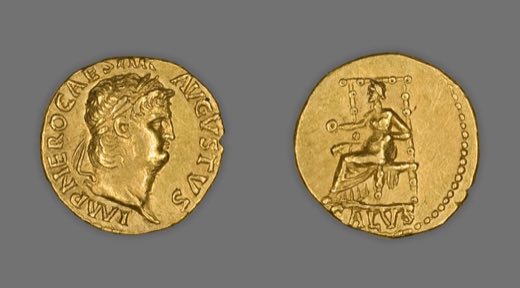
Coins of several mints passed through Judea at once. Silver came from the emperors — the denarius with Caesar’s head — and from the city of Tyre, whose shekels bore the head of its god Melqart and were the coin the temple required for the half-shekel tax; the “four-drachma coin” Peter found would pay for two (Matthew 17:27). Everyday change was bronze. Herod the Great and his sons Archelaus and Antipas minted bronze without any human image, out of regard for the Law’s ban on images; Philip, who ruled a mostly non-Jewish land, put the emperor’s head on his.
The Roman prefects of Judea minted small bronze coins in Jerusalem with the emperor’s name but no portrait, decorated with ears of grain, palm branches or wreaths. Pilate’s coins, of AD 29–31, show instead two Roman religious objects, a priest’s ladle and an augur’s curved staff. The widow’s two small coins were such local bronzes; Mark explains them to his readers in Roman money as a quadrans (Mark 12:42). During the revolt of AD 66–70 the rebels struck their own silver shekels, inscribed “Jerusalem the holy”.
Key verses
So they brought it, and He asked them, “Whose image is this? And whose inscription?” “Caesar’s,” they answered.“But so that we may not offend them, go to the sea, cast a hook, and take the first fish you catch. When you open its mouth, you will find a four-drachma coin. Take it and give it to them for My tax and yours.”Are not two sparrows sold for a penny? Yet not one of them will fall to the ground apart from the will of your Father.Then one poor widow came and put in two small copper coins, which amounted to a small fraction of a denarius.See also
- DenariusMoney and measures
- The widow’s mite (lepton)Money and measures
- Money changers and bankersMoney and measures
- Tribute and the censusJewish groups and the Roman world
- Latin in the New TestamentJewish groups and the Roman world
- Jewish coins from the Persians to Bar KokhbaMoney and measures
- Vespasian and TitusRulers around the Bible
Sources: Tyndale Open Bible Dictionary © 2023 Tyndale House Publishers, CC BY-SA 4.0 — adapted and shortened; the original work is available for free at tyndaleopenresources.com · Sources and rights