Encyclopedia › Sickness and healing
Sickness and healing
Boils and sores
Hebrew shechin, a burning boil · the sixth plague · Job’s potsherd · Lazarus at the gate
The Hebrew shechin comes from a root meaning “to be hot”: an inflamed, running sore or boil. It was the sixth plague of Egypt. Moses and Aaron took soot from a kiln and Moses tossed it into the air before Pharaoh, “and festering boils broke out on man and beast” (Exodus 9:10); even the magicians could not stand before Moses because of them. Deuteronomy remembers them among the curses for disobedience: “the boils of Egypt, with tumors and scabs and itch from which you cannot be cured” (Deuteronomy 28:27). King Hezekiah’s illness was a boil, treated with a cake of figs.
Job, tested in his body, was struck “with terrible boils from the soles of his feet to the crown of his head”, and he “took a piece of broken pottery to scrape himself as he sat among the ashes” (Job 2:7–8) — probably the heap of ash and refuse outside the town. His friends came, sat with him seven days and then argued that he must have deserved it, which the book in the end denies. In Jesus’ parable a poor man named Lazarus lay at a rich man’s gate, “covered with sores and longing to be fed with the crumbs that fell from the rich man’s table. Even the dogs came and licked his sores” (Luke 16:20–21).
In art
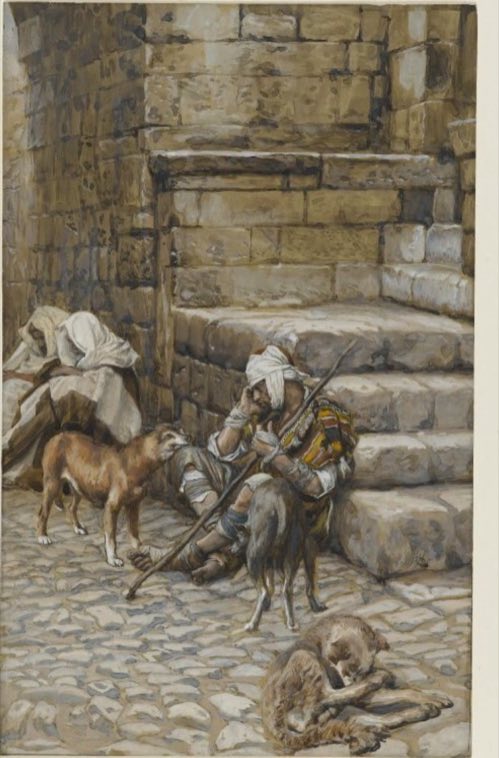 The Poor Lazarus at the Rich Man's Door (Le pauvre Lazare à la porte du riche)James Tissot
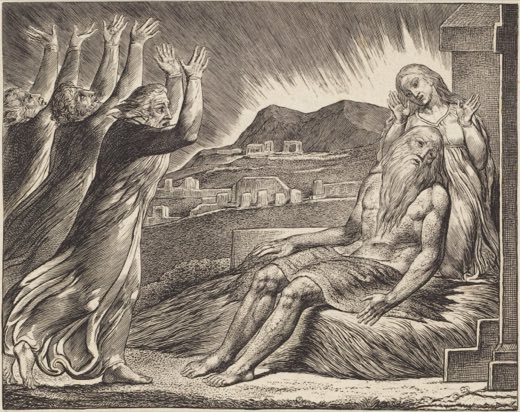 Job's ComfortersWilliam Blake
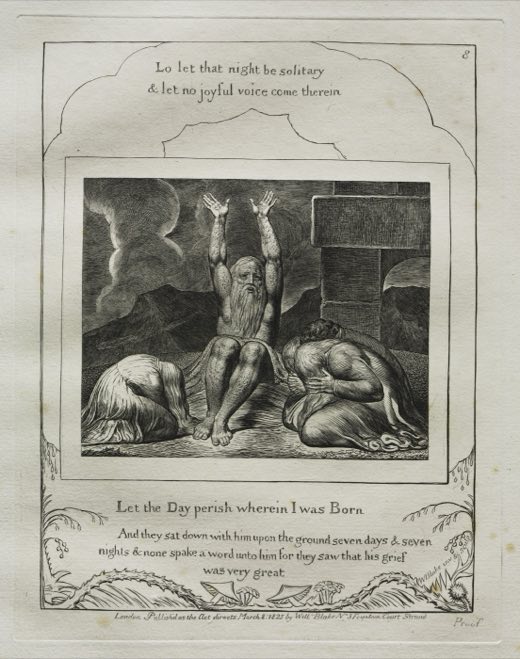 The Book of Job, plate 8: Let the Day perish wherein I was BornWilliam Blake
See also
- Sickness in the BibleSickness and healing
- Hezekiah’s illness and the fig poulticeSickness and healing
- Epidemics in the biblical worldWeather and the forces of nature
- Ointments, poultices and bandagesSickness and healing
- The Babylonian righteous sufferer and JobAncient texts beside the Bible
- Lazarus (Luke)People
Sources: Tyndale Open Bible Dictionary © 2023 Tyndale House Publishers, CC BY-SA 4.0 — adapted and shortened; the original work is available for free at tyndaleopenresources.com · Sources and rights