Encyclopedia › Ancient texts beside the Bible
Ancient texts beside the Bible
The Babylonian righteous sufferer and Job
Ludlul bēl nēmeqi, “I will praise the lord of wisdom” · the Babylonian Theodicy · compared with Job
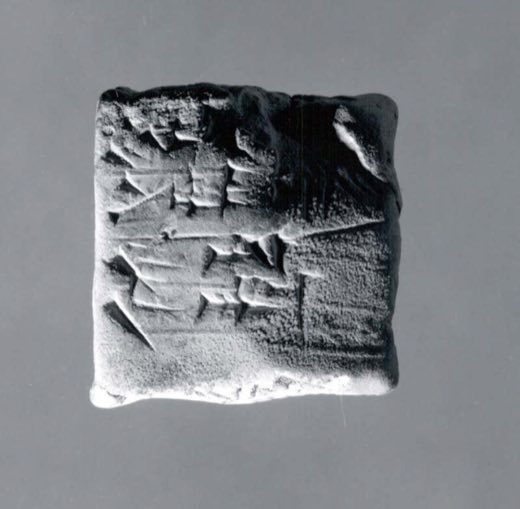
Babylon too had poems about a good man who suffers. In Ludlul bēl nēmeqi, “I will praise the lord of wisdom”, from the late 2nd millennium BC, a noble named Shubshi-meshre-Shakkan tells how he lost the king’s favor, his friends and his health; he prayed and sacrificed, and the gods did not answer, so that he wondered whether what seems good to people is evil to the gods. At last the god Marduk heals and restores him, and he praises him. The Babylonian Theodicy, from about 1000 BC, is a dialogue in 27 stanzas: a sufferer complains of the injustice of the world, and a friend answers that the gods’ ways cannot be known. The first signs of its stanzas spell out the name of its author, the priest Saggil-kinam-ubbib.
Scholars compare both with the book of Job, the story of a man “blameless and upright, fearing God and shunning evil” (Job 1:1) who loses everything, argues with three friends who come to comfort him (Job 2:11), and at last is answered by “the LORD … out of the whirlwind” (Job 38:1). The likenesses — a good man’s suffering, friends who defend the ways of heaven, a restoration in the end (Job 42:10) — show that Israel shared a question asked across the ancient Near East. The differences are as plain: Job argues with God Himself, and God speaks to him.
In art
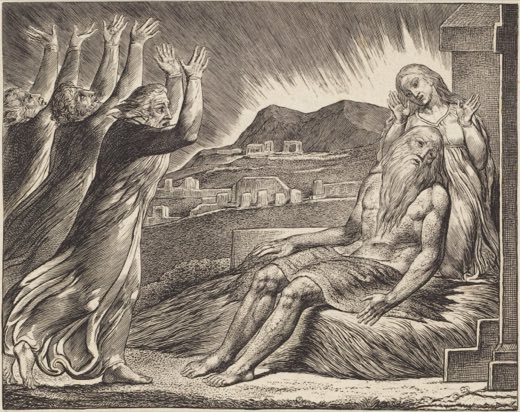 Job's ComfortersWilliam Blake
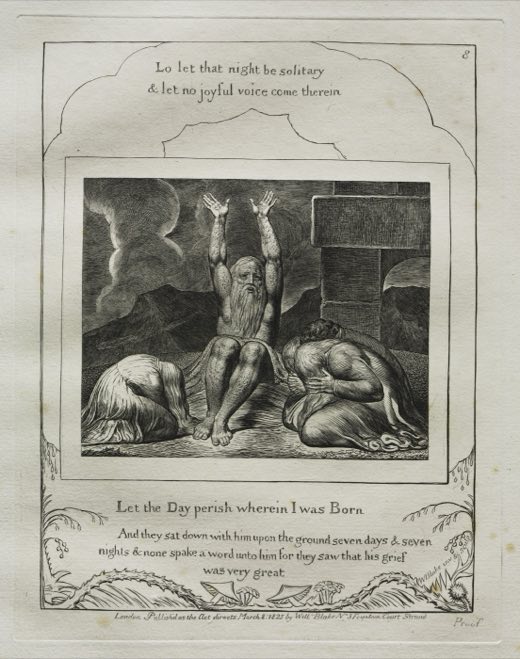 The Book of Job, plate 8: Let the Day perish wherein I was BornWilliam Blake
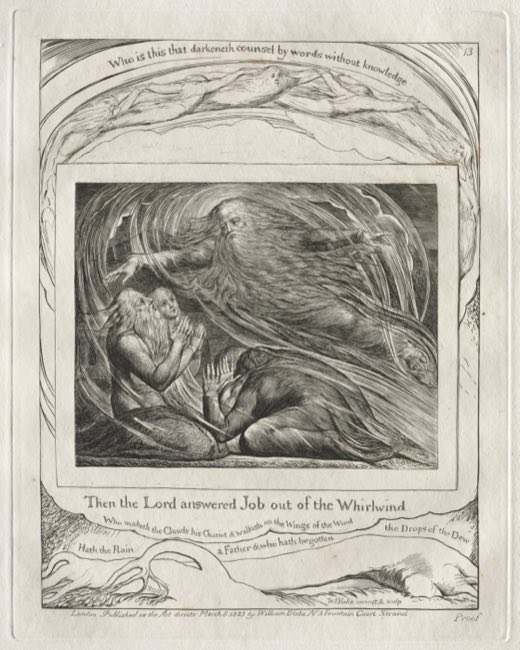 The Book of Job, plate 13: Then the Lord answered Job out of the WhirlwindWilliam Blake
See also
- Marduk (Bel) and NeboPeoples and gods around Israel
- How the wisdom books were gatheredHow the Bible came to be
- The Instruction of Amenemope and ProverbsAncient texts beside the Bible
- Boils and soresSickness and healing
- JobPeople
Sources: Tyndale Open Bible Dictionary © 2023 Tyndale House Publishers, CC BY-SA 4.0 — adapted and shortened; the original work is available for free at tyndaleopenresources.com · Sources and rights