Encyclopedia › Weather and the forces of nature
Weather and the forces of nature
Epidemics in the biblical world
Hebrew dever (pestilence), maggefah (plague) · the Philistine tumors · sieges and army camps
Before anyone knew of germs, epidemics spread fastest where many people crowded together — in besieged cities and in army camps. Hebrew has several words: dever, “pestilence,” often named with “sword and famine” in Jeremiah and Ezekiel (Jeremiah 14:12), and maggefah, “blow” or “plague.” In the Bible such plagues are sent by God, and the illness itself is seldom described. After David’s census a plague killed “seventy thousand of the people from Dan to Beersheba” (2 Samuel 24:15).
When the Philistines kept the captured ark, the people of Ashdod, Gath and Ekron were struck “with tumors” and many died (1 Samuel 5:6–12); the Philistines sent it back with “five gold tumors and five gold rats” (1 Samuel 6:4). Because of the rats and the swellings many readers think of bubonic plague, carried by the fleas of rats; others doubt it. When Sennacherib threatened Jerusalem, “the angel of the LORD went out and struck down 185,000 men in the camp of the Assyrians” (2 Kings 19:35). Herodotus tells a different story of the same king’s army in Egypt: mice gnawed its bowstrings in one night. Some historians look for an epidemic behind both stories; neither text names one.
In art
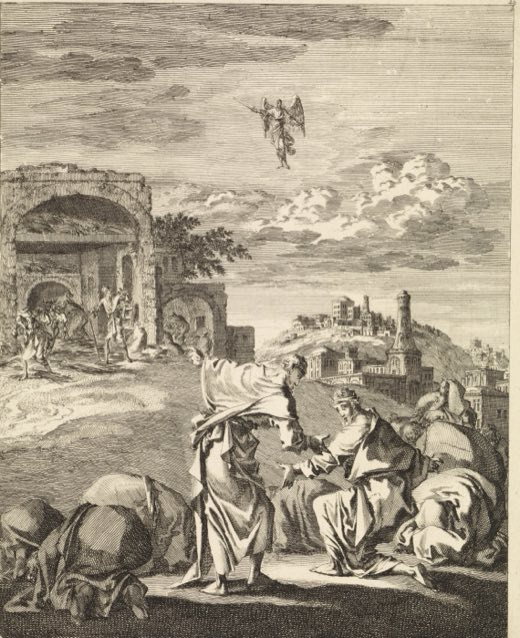 David Sees the Angel over JerusalemJan Luyken
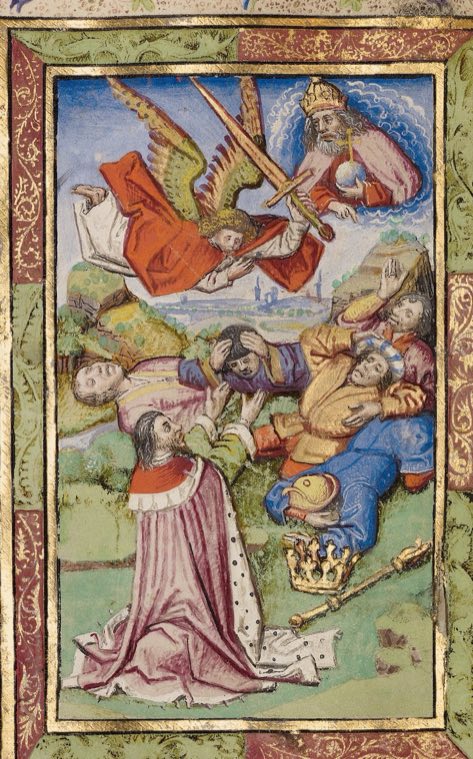 David Praying That the Israelites Be Spared from a Plague (Ms. Ludwig IX 9, fol. 74v, from the Book of Hours)Unknown Flemish painter
See also
- Sickness in the BibleSickness and healing
- SennacheribRulers around the Bible
- Boils and soresSickness and healing
- SennacheribPeople
- AshdodPlaces
- EkronPlaces
Sources: Tyndale Open Bible Dictionary © 2023 Tyndale House Publishers, CC BY-SA 4.0 — adapted and shortened; the original work is available for free at tyndaleopenresources.com · Sources and rights