Encyclopedia › Weapons and warfare
Weapons and warfare
Captives and spoil
David’s rule: equal shares · Elisha feeds the Aramean raiders · Oded and the captives of Judah
War brought plunder and prisoners, and the Bible tells of rules for both. The spoil was to be shared. When some of David’s men refused to give anything to those who had been too exhausted to go on and had stayed with the baggage, David answered, “The share of the one who went to battle will match the share of the one who stayed with the supplies. They will share alike” (1 Samuel 30:24) — “and so it has been from that day forward” (1 Samuel 30:25). Abram, after his victory, would take nothing at all.
Prisoners were usually sold or set to work, and great powers deported whole peoples. Two stories go the other way. When Aramean raiders were led blinded into Samaria and the king asked whether to kill them, Elisha said, “Set food and water before them, that they may eat and drink and then return to their master” (2 Kings 6:22); after a feast they went home, and the raiders “did not come into the land of Israel again” (2 Kings 6:23). When the army of Israel brought thousands of captives from Judah to Samaria, the prophet Oded and leaders of Ephraim sent them back: they “clothed them, gave them sandals and food and drink, anointed their wounds, and put all the feeble on donkeys”, and brought them “to Jericho, the City of Palms, to their brothers” (2 Chronicles 28:15). Many readers set this beside Jesus’ story of the good Samaritan, told on the road to Jericho.
In art
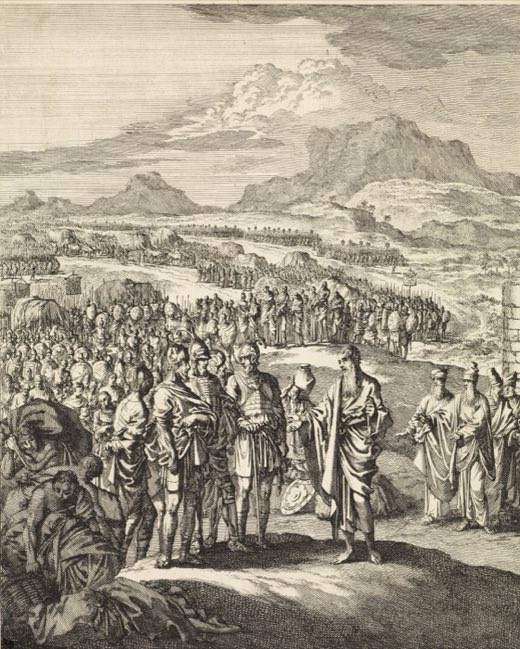 The Prophet Oded Speaks for the Captives
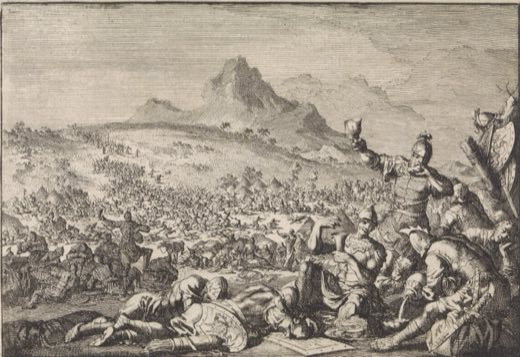 The Amalekites Feasting
See also
- Into exile: the long road to Assyria and BabylonRoads and travel
- A good SamaritanBible expressions we still use
- Slaves in the Roman worldJewish groups and the Roman world
- Four kings against five: Abram rescues LotWeapons and warfare
- Rules for war in DeuteronomyWeapons and warfare
- Trading in peopleTrade, craft and color
- DavidPeople
- ElishaPeople
- Oded (2 Chronicles 15:1)People
- SamariaPlaces
- JerichoPlaces
Sources: Tyndale Open Bible Dictionary © 2023 Tyndale House Publishers, CC BY-SA 4.0 — adapted and shortened; the original work is available for free at tyndaleopenresources.com · Sources and rights