Encyclopedia › Home and family
Home and family
Servants in the household
Abraham’s chief servant · Rebekah’s nurse · Naaman’s servant girl · Rhoda at the gate
A large household had servants, and many of them lived with the family for life. Abraham sent “the chief servant of his household, who managed all he owned” (Genesis 24:2) to find a wife for Isaac, and that servant prayed at the well for the right young woman. Rebekah’s nurse Deborah came with her from her family’s home, and when she died the oak near Bethel where she was buried was named Allon-bachuth, “oak of weeping” (Genesis 35:8). Joseph rose in Potiphar’s house until he had “everything he owned” in his care. Servants were part of the household before God: the Sabbath rest was for “your manservant or maidservant” too (Exodus 20:10), and they rejoiced with the family at the feasts (Deuteronomy 16:11).
Servants often see what their masters do not. A girl taken captive from Israel served Naaman’s wife and told her, “If only my master would go to the prophet who is in Samaria, he would cure him” (2 Kings 5:3). One of Nabal’s young men warned Abigail of the danger from David (1 Samuel 25:14). A centurion at Capernaum had “a highly valued servant” for whom he sought Jesus’ help (Luke 7:2). And when Peter, freed from prison, knocked at the gate of Mary’s house in Jerusalem, the servant girl Rhoda “was so overjoyed that she forgot to open the gate” (Acts 12:14). The laws for Hebrew debt-servants and the slaves of the Roman world are told elsewhere.
In art
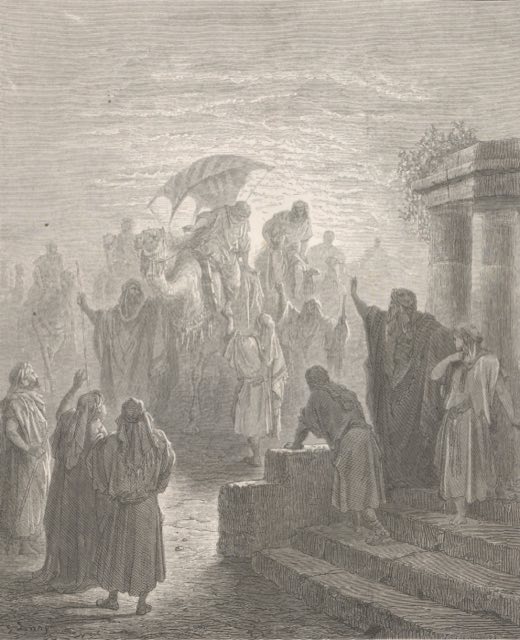 Isaac Receives Rebekah
See also
- The householdHome and family
- Debt slaves and their releaseHuman life in Bible times
- Slaves in the Roman worldJewish groups and the Roman world
- Freedmen and Caesar’s householdJewish groups and the Roman world
- Nurses and nursemaidsWork and trades
- Stewards and household managersWork and trades
- Slaves in the Law of MosesHuman life in Bible times
- Deborah (Genesis)People
- Naaman (2 Kings)People
- Abigail (1 Samuel)People
- RhodaPeople
Sources: Tyndale Open Bible Dictionary © 2023 Tyndale House Publishers, CC BY-SA 4.0 — adapted and shortened; the original work is available for free at tyndaleopenresources.com · Sources and rights