Encyclopedia › Rulers around the Bible
Rulers around the Bible
Vespasian and Titus
Emperors AD 69–79 and 79–81 · the Jewish War · the Arch of Titus · the Jewish tax
Vespasian, a soldier from a modest Italian family, was sent by Nero in AD 67 to put down the revolt in Judea. During his campaign Josephus, the captured Jewish commander of Galilee, told him that he would become emperor; in 69, after Nero’s death and a year of civil war, the armies of the East proclaimed him, and he founded the Flavian dynasty. His elder son Titus took over the siege and captured Jerusalem in AD 70, when the temple burned — the event Jesus foretold: “They will not leave one stone on another” (Luke 19:44).
In Rome father and son held a triumph in 71, and the temple’s lampstand, table and trumpets were carried in procession; the Arch of Titus, built after his death, shows the scene in relief. Coins were struck with the words Iudaea capta, “Judea captured”, showing a mourning woman under a palm tree. Vespasian turned the half-shekel that Jews had paid to the temple into a tax for the temple of Jupiter in Rome, the fiscus Judaicus. Spoils of the war helped to pay for the Colosseum, begun by Vespasian and opened by Titus in 80. Titus’s love affair with the Jewish princess Bernice, the sister of Agrippa II, scandalized Rome, and he sent her away when he became emperor.
In art
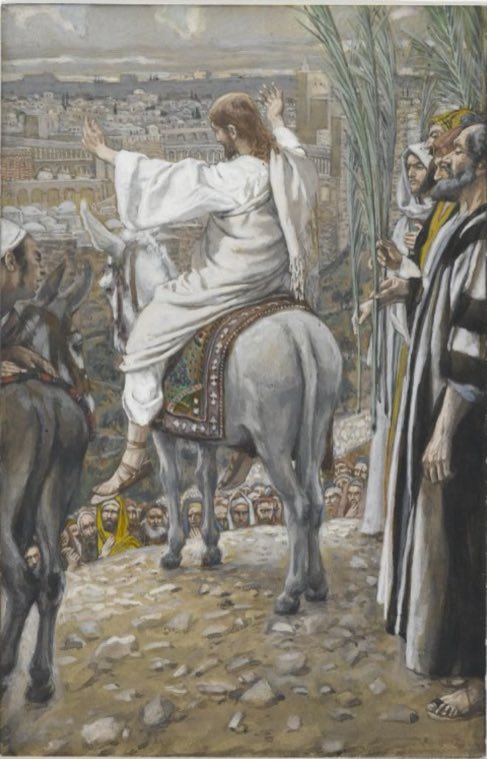 The Lord Wept (Le Seigneur pleura)
See also
- The Jewish War and the fall of Jerusalem, AD 66–70Weapons and warfare
- NeroRulers around the Bible
- Bernice and DrusillaRulers around the Bible
- Agrippa II in historyRulers around the Bible
- DomitianRulers around the Bible
- Coins in Roman JudeaJewish groups and the Roman world
Sources: Tyndale Open Bible Dictionary © 2023 Tyndale House Publishers, CC BY-SA 4.0 — adapted and shortened; the original work is available for free at tyndaleopenresources.com · Sources and rights