Food and drink
Fruit and nuts
Grapes, figs, pomegranates, dates and melons · almonds and pistachios · fresh in summer, dried for winter
The fruit of the land was its pride. The spies sent from the wilderness cut down “a branch with a single cluster of grapes, which they carried on a pole between two men”, with pomegranates and figs (Numbers 13:23). Grapes, figs and pomegranates, with olives and dates, were the fruits named again and again; the Israelites in the desert remembered the cucumbers and melons of Egypt (Numbers 11:5). Apples, if the Hebrew tappuach means apple, and mulberries were known; citrus fruit came only later.
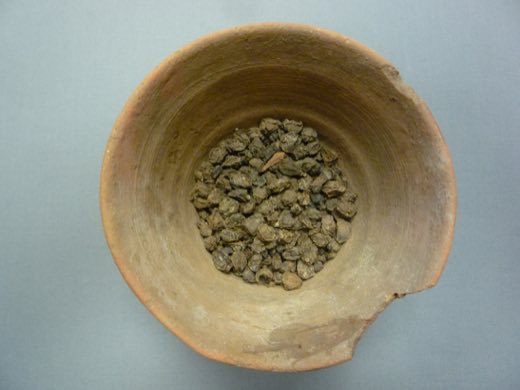
Fresh fruit lasted a few weeks, so most of the crop was dried. Raisins and pressed figs kept for months and travelled well. Abigail met David’s men with “a hundred clusters of raisins, and two hundred cakes of figs” (1 Samuel 25:18), and Ziba brought “a hundred summer fruits” (2 Samuel 16:1).
Nuts were few but prized. When Jacob sent his sons to Egypt with a gift for the governor, he chose “the best products of the land”: “a little balm and a little honey, spices and myrrh, pistachios and almonds” (Genesis 43:11). Walnuts grew in gardens too: “I went down to the walnut grove,” says the Song of Songs (6:11).
See also
- Raisin cakes and fig cakesFood and drink
- Fig treePlants of the Bible
- GrapevinePlants of the Bible
- PomegranatePlants of the Bible
- Almond treePlants of the Bible
- PistachioPlants of the Bible
- WalnutPlants of the Bible
- Cucumbers and melonsPlants of the Bible
- Figs and summer fruitField, orchard and water
- Gardens and royal parksBuildings and structures
Sources: Tyndale Open Bible Dictionary © 2023 Tyndale House Publishers, CC BY-SA 4.0 — adapted and shortened; the original work is available for free at tyndaleopenresources.com · Sources and rights