Encyclopedia › Plants of the Bible
Plants of the Bible
Cucumbers and melons
Hebrew qishshu’im, ’avattichim · muskmelon and watermelon · fruits of Egypt’s irrigated fields
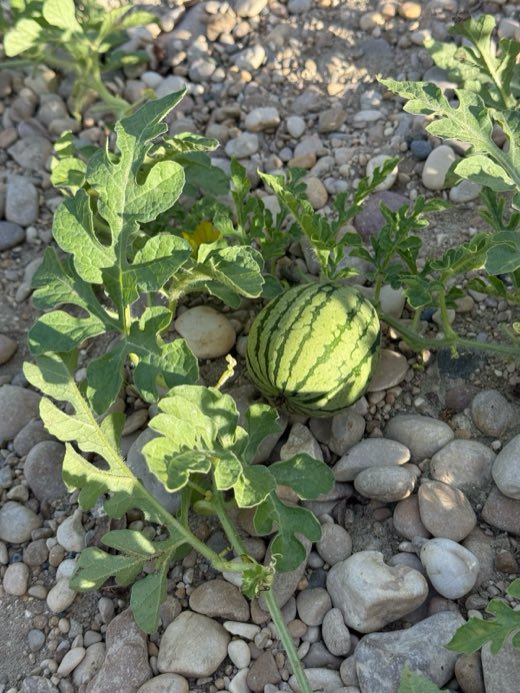
The “cucumbers” and “melons” the Israelites longed for in the desert were juicy fruits of creeping vines grown on Egypt’s watered fields. The Hebrew qishshu’im is usually translated cucumbers, but many botanists think it means a kind of muskmelon — including a long, curved variety still called the snake cucumber — because the garden cucumber may not yet have reached Egypt. The ’avattichim were watermelons, which came from Africa and were grown in Egypt from early times; watermelon seeds have been found in Egyptian tombs.
Melons were grown in Israel too, in open fields where a watchman sat in a small shelter of branches to guard the ripening fruit from thieves and animals. Once the harvest was over the shelter was left empty, so Isaiah uses it as a picture of loneliness: “like a shack in a cucumber field” (Isaiah 1:8). Jeremiah mocks idols that stand “like scarecrows in a cucumber patch”, unable to speak or walk. The fruits were eaten fresh, and their water was welcome in the summer heat.
In nature
All verses with this plant (3)
Where the Hebrew, Aramaic or Greek word for it stands in the text.
Numbers1
We remember the fish we ate freely in Egypt, along with the cucumbers, melons, leeks, onions, and garlic.Isaiah1
And the Daughter of Zion is abandoned like a shelter in a vineyard, like a shack in a cucumber field, like a city besieged.Jeremiah1
Like scarecrows in a cucumber patch, their idols cannot speak. They must be carried because they cannot walk. Do not fear them, for they can do no harm, and neither can they do any good.”All verses on this topic
See also
- Onions, leeks and garlicPlants of the Bible
- Wild gourdPlants of the Bible
- Fruit and nutsFood and drink
Sources: Tyndale Open Bible Dictionary © 2023 Tyndale House Publishers, CC BY-SA 4.0 — adapted and shortened; the original work is available for free at tyndaleopenresources.com · Plants and Trees in the Bible © United Bible Societies 2025, adapted from R. Koops, Each According to its Kind © 2012 UBS, CC BY-SA 4.0 · Sources and rights