Encyclopedia › Writing and books
Writing and books
Scrolls in visions
Ezekiel eats a scroll · Zechariah’s flying scroll · the scroll with seven seals
Prophets saw scrolls in their visions. Ezekiel saw a hand holding out a scroll, “written on the front and back” with “words of lamentation, mourning, and woe” (Ezekiel 2:10) — unusual, since a scroll was normally written on one side only. He was told to eat it, “and it was as sweet as honey in my mouth” (Ezekiel 3:3): the prophet was to take God’s message into himself before he spoke it. Jeremiah used the same picture: “Your words were found, and I ate them” (Jeremiah 15:16).
Zechariah saw “a flying scroll … twenty cubits long and ten cubits wide” (Zechariah 5:2), about nine meters by four and a half, unrolled in the air like a huge notice: on its two sides were written curses against thieves and perjurers. In Revelation John sees in the right hand of the One on the throne a scroll that “had writing on both sides and was sealed with seven seals”, and no one could open it until the Lamb came (Revelation 5:1–7). Later an angel gives John “the small scroll” to eat; it is sweet in the mouth and bitter in the stomach (Revelation 10:9–10), and he must prophesy again.
In art
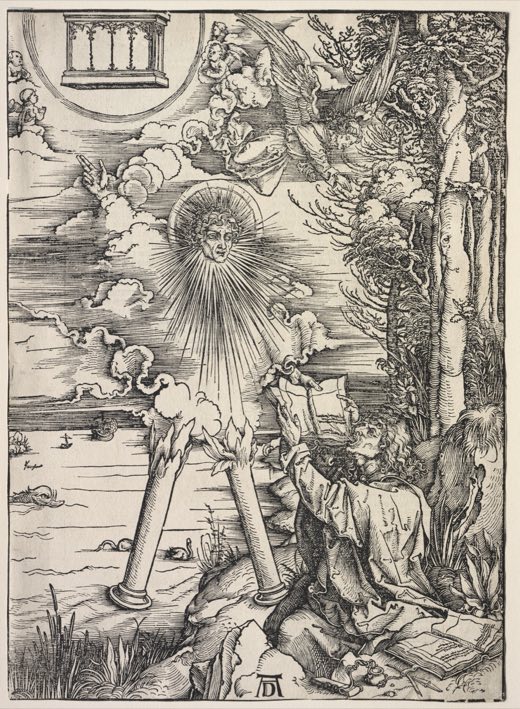 Revelation of St. John: St. John Devouring the BooksDürer
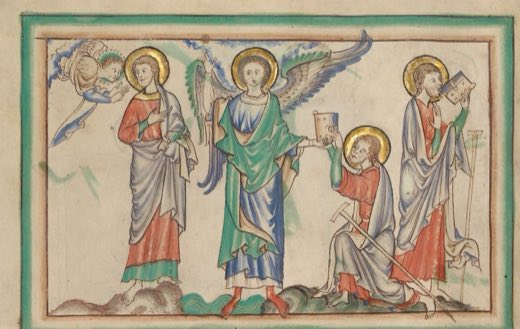 Saint John Eats the Book Received from the Angel (Ms. Ludwig III 1, fol. 15v, from the Getty Apocalypse)Unknown English painter
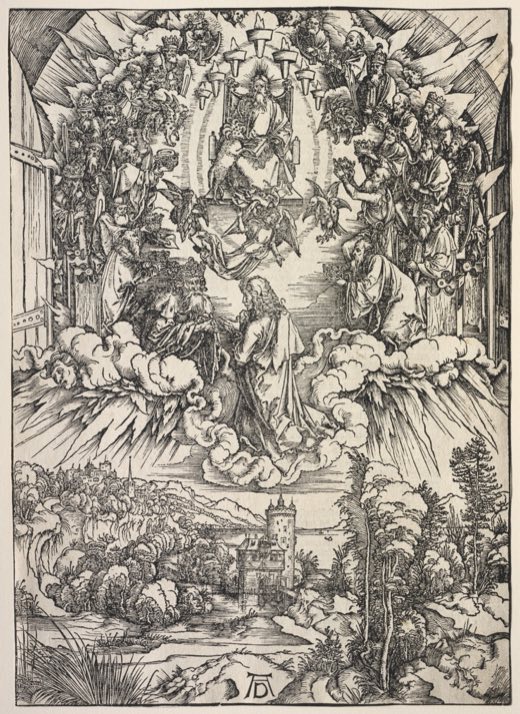 Revelation of St. John: St. John before the ThroneDürer
See also
- Scrolls and booksWriting and books
- Sealed documentsWriting and books
- How Revelation was writtenHow the Bible came to be
- How the prophets’ words were written downHow the Bible came to be
- Books in heaven: the Book of LifeWriting and books
- EzekielPeople
Sources: Tyndale Open Bible Dictionary © 2023 Tyndale House Publishers, CC BY-SA 4.0 — adapted and shortened; the original work is available for free at tyndaleopenresources.com · Sources and rights