Encyclopedia › How the Bible came to be
How the Bible came to be
How the prophets’ words were written down
Jeremiah dictates to Baruch · a scroll burned and written again · the Twelve on one scroll
The prophets spoke first; their words were written down afterward, by themselves or by those around them. Isaiah was told to “bind up the testimony and seal the law among my disciples” (Isaiah 8:16) and to write a message “on a scroll; it will be for the days to come, a witness forever and ever” (Isaiah 30:8). Habakkuk heard, “Write down this vision and clearly inscribe it on tablets, so that a herald may run with it” (Habakkuk 2:2).
Jeremiah’s book tells how one such scroll was made. In 605 BC the LORD told him to write down all the words he had spoken since the days of Josiah, and “at the dictation of Jeremiah, Baruch wrote on a scroll” (Jeremiah 36:4). The scroll was read in the temple and then to King Jehoiakim, who sat by a fire in his winter house: “as soon as Jehudi had read three or four columns, Jehoiakim would cut them off with a scribe’s knife and throw them into the firepot” (Jeremiah 36:23). So Jeremiah dictated it again, “and many similar words were added to them” (Jeremiah 36:32). The books of the prophets grew in this way and were gathered over time; the twelve shorter books, from Hosea to Malachi, were copied together on one scroll and counted as one book, the Twelve. Many scholars think disciples later added to some books; others see in each the work of the prophet whose name it bears.
In art
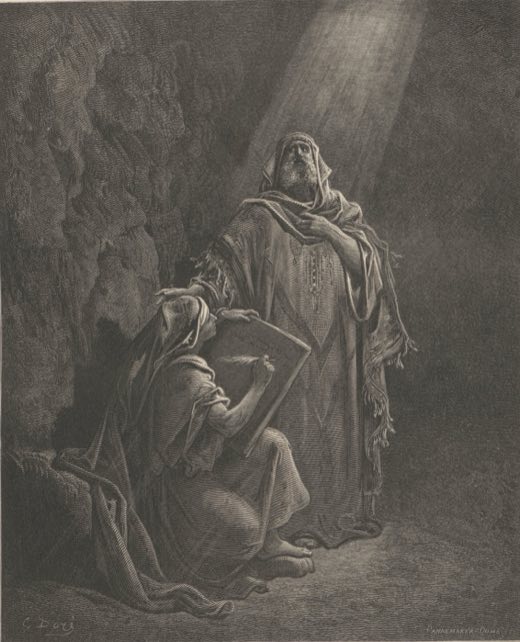 Baruch Writes Jeremiah's Prophecies
See also
- Scrolls and booksWriting and books
- Pen, ink and writing caseWriting and books
- How the Bible is arrangedHow the Bible came to be
- Books the Bible quotes but we do not haveHow the Bible came to be
- Scrolls in visionsWriting and books
- BaruchPeople
- JeremiahPeople
Sources: Tyndale Open Bible Dictionary © 2023 Tyndale House Publishers, CC BY-SA 4.0 — adapted and shortened; the original work is available for free at tyndaleopenresources.com · Sources and rights