Encyclopedia › Writing and books
Writing and books
Royal records and archives
Hebrew mazkir, “recorder” · the king’s chronicles · Persian archives at Babylon and Ecbatana
Kings kept records. Among David’s and Solomon’s officials were the scribes and “Jehoshaphat son of Ahilud … the recorder” (1 Kings 4:3), the mazkir, literally “the one who reminds”. Officials had a room for their papers: Baruch’s scroll was read in “the scribe’s chamber in the king’s palace” (Jeremiah 36:12). The books of Kings again and again send the reader to such records for more: “are they not written in the Book of the Chronicles of the Kings of Judah?” (1 Kings 14:29).
Persian kings kept archives on a great scale; thousands of administrative clay tablets were found at Persepolis in the 1930s. In the Bible the archives decide matters. Enemies of Jerusalem urged King Artaxerxes to search “the record books of your fathers” to see that it was a rebellious city (Ezra 4:15). Later the Jews’ supporters asked that “a search be made of the royal archives in Babylon” to find Cyrus’s decree (Ezra 5:17). Darius had it done, and the scroll turned up in another place, “in the fortress of Ecbatana, in the province of Media” (Ezra 6:2), the kings’ summer capital. In Susa a sleepless king had the chronicles read to him at night, and heard there how Mordecai had once saved his life (Esther 6:1–2).
In art
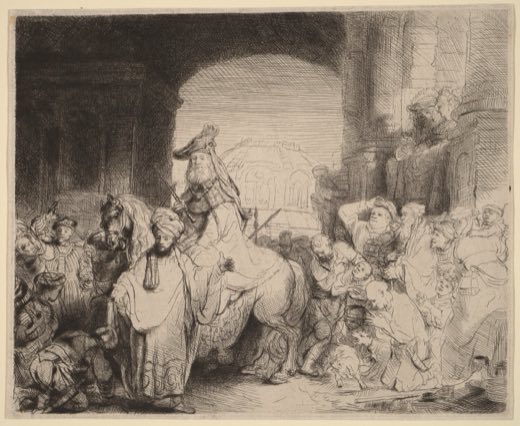 The Triumph of Mordecai
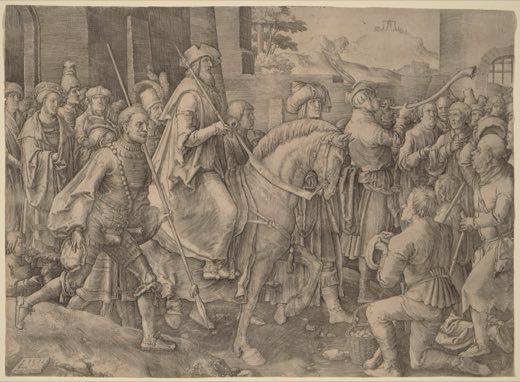 The Triumph of Mordecai
See also
- ScribeWork and trades
- Books the Bible quotes but we do not haveHow the Bible came to be
- Storehouses, granaries and archivesBuildings and structures
- Decrees and edicts of kingsWriting and books
- Family records and lists of namesWriting and books
- Darius I the GreatRulers around the Bible
- Susa: a capital of Elam and PersiaCities of the Bible
- The king’s officialsWork and trades
- EcbatanaPlaces
- BabylonPlaces
- SusaPlaces
Sources: Tyndale Open Bible Dictionary © 2023 Tyndale House Publishers, CC BY-SA 4.0 — adapted and shortened; the original work is available for free at tyndaleopenresources.com · Sources and rights