Encyclopedia › Writing and books
Writing and books
Pen, ink and writing case
Hebrew ‘et sofer (pen), dyow (ink), qeseth sofer (writing case) · Greek kalamos, melas, chartēs
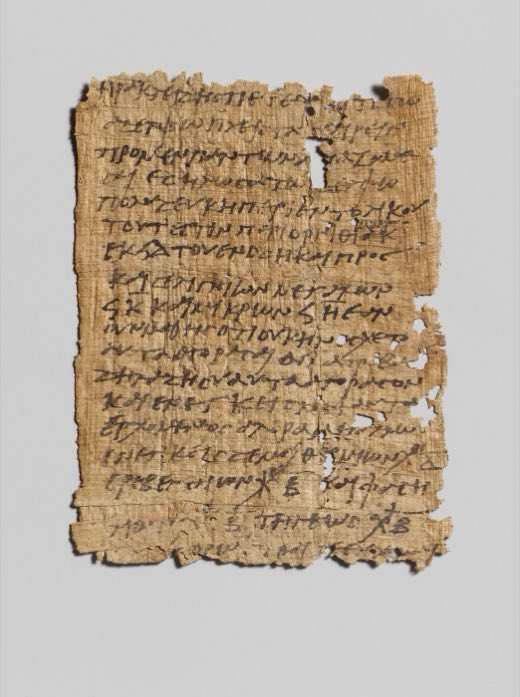
On papyrus and leather a scribe wrote with a reed pen, about 20 cm (8 inches) long, cut to a point and split to form a nib; in Egypt a rush frayed into a fine brush was used as well. Ink was mostly soot mixed with gum or oil and dried into a cake; to write, the scribe wet the pen and rubbed it on the cake. Asked how he had written down Jeremiah’s words, Baruch answered, “He recited all these words to me and I wrote them in ink on the scroll” (Jeremiah 36:18). Such ink could be washed off again (Numbers 5:23), and a small knife sharpened the pens and trimmed the scroll. Pens, ink and the hollows for mixing it were carried in a wooden writing case hung at the belt — the “writing kit” of the man clothed in linen in Ezekiel’s vision (Ezekiel 9:2).
The Greek chartēs, “paper”, was a sheet of papyrus. The Elder has many things to write but would rather not use “paper and ink”: he hopes to come and speak “face to face” (2 John 1:12), and in 3 John he would rather not write “with pen and ink” (3 John 1:13). Parchment was the skin of sheep or goats with the hair scraped off, smoothed with lime. Near the end of his life Paul asked Timothy to bring “the cloak that I left with Carpus at Troas, and my scrolls, especially the parchments” (2 Timothy 4:13).
In art
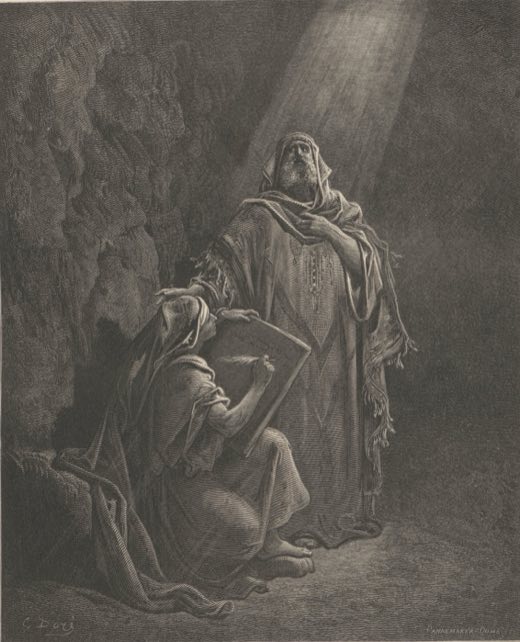 Baruch Writes Jeremiah's Prophecies
Key verses
“It was at his dictation,” Baruch replied. “He recited all these words to me and I wrote them in ink on the scroll.”And I saw six men coming from the direction of the Upper Gate, which faces north, each with a weapon of slaughter in his hand. With them was another man clothed in linen who had a writing kit at his side. And they came in and stood beside the bronze altar.And the priest shall write these curses on a scroll and wash them off into the bitter water.I have many things to write to you, but I would prefer not to do so with paper and ink. Instead, I hope to come and speak with you face to face, so that our joy may be complete.I have many things to write to you, but I would prefer not to do so with pen and ink.When you come, bring the cloak that I left with Carpus at Troas, and my scrolls, especially the parchments.All verses that name it (10)
Where the Hebrew, Aramaic or Greek word for it stands in the text.
Psalms1
For the choirmaster. To the tune of “The Lilies.” A Maskil of the sons of Korah. A love song. My heart is stirred by a noble theme as I recite my verses to the king; my tongue is the pen of a skillful writer.Jeremiah2
How can you say, ‘We are wise, and the Law of the LORD is with us,’ when in fact the lying pen of the scribes has produced a deception?“It was at his dictation,” Baruch replied. “He recited all these words to me and I wrote them in ink on the scroll.”Ezekiel3
And I saw six men coming from the direction of the Upper Gate, which faces north, each with a weapon of slaughter in his hand. With them was another man clothed in linen who had a writing kit at his side. And they came in and stood beside the bronze altar.Then the glory of the God of Israel rose from above the cherubim, where it had been, and moved to the threshold of the temple. And He called to the man clothed in linen who had the writing kit at his side.Then the man clothed in linen with the writing kit at his side reported back, “I have done as You commanded.”2 Corinthians1
It is clear that you are a letter from Christ, the result of our ministry, written not with ink but with the Spirit of the living God, not on tablets of stone but on tablets of human hearts.2 Timothy1
When you come, bring the cloak that I left with Carpus at Troas, and my scrolls, especially the parchments.2 John1
I have many things to write to you, but I would prefer not to do so with paper and ink. Instead, I hope to come and speak with you face to face, so that our joy may be complete.3 John1
I have many things to write to you, but I would prefer not to do so with pen and ink.See also
- Scrolls and booksWriting and books
- ScribeWork and trades
- ReedPlants of the Bible
- Scrolls, papyrus and parchmentHow the Bible came to be
- Tablets of stone and woodWriting and books
- How the prophets’ words were written downHow the Bible came to be
- Dating by handwritingHow the Bible’s world is studied
Sources: Tyndale Open Bible Dictionary © 2023 Tyndale House Publishers, CC BY-SA 4.0 — adapted and shortened; the original work is available for free at tyndaleopenresources.com · Human-made Things in the Bible © United Bible Societies 2025, adapted from R. Pritz, The Works of Their Hands: Man-made Things in the Bible © 2009 UBS, CC BY-SA 4.0 · Sources and rights