Encyclopedia › Writing and books
Writing and books
Covenants put in writing
The Book of the Covenant · Samuel’s scroll of the kingship · Nehemiah’s sealed agreement
When Israel made a covenant, it was written down and kept. At Sinai Moses “took the Book of the Covenant and read it to the people, who replied, ‘All that the LORD has spoken we will do, and we will be obedient’” (Exodus 24:7). Moses later “wrote down this law and gave it to the priests” (Deuteronomy 31:9), with the command to read it to all Israel every seven years at the Feast of Tabernacles (Deuteronomy 31:10–11). At Shechem Joshua renewed the covenant: he “recorded these things in the Book of the Law of God” and set up a large stone as a witness (Joshua 24:26). When Israel asked for a king, “Samuel explained to the people the rights of kingship. He wrote them on a scroll and laid it up before the LORD” (1 Samuel 10:25), and a king was to write out his own copy of the law (Deuteronomy 17:18).
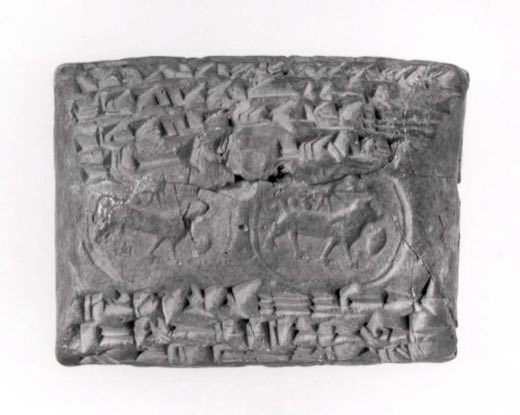
After the exile the people put their promises in writing: “we make a binding agreement, putting it in writing and sealing it with the names of our leaders, Levites, and priests” (Nehemiah 9:38), and the list of those who sealed it follows, Nehemiah first. Many scholars compare such covenants with the treaties of the Hittite and Assyrian kings, which were written on tablets, kept in temples and read out at set times.
In art
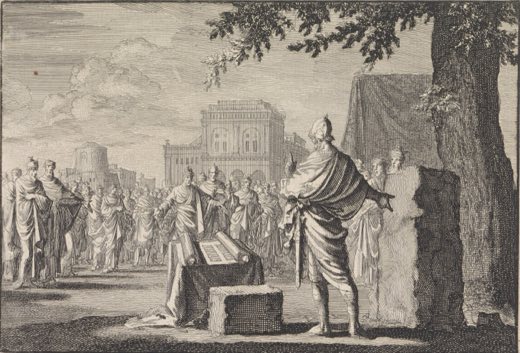 Joshua Sets Up a Stone at Shechem
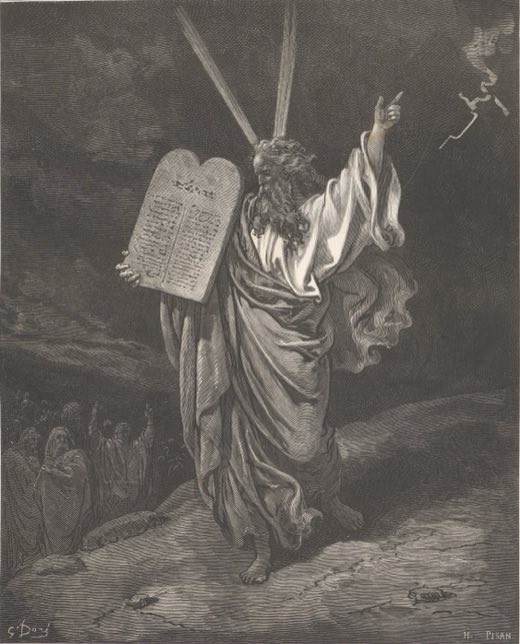 Moses Comes Down from Mount Sinai
See also
- The Torah and MosesHow the Bible came to be
- The Ten CommandmentsThe seven deadly sins
- Certificates, bills and contractsWriting and books
- Reading aloudWriting and books
- Writing on stone and plasterWriting and books
- MosesPeople
- Joshua, son of NunPeople
- SamuelPeople
- Nehemiah, son of HacaliahPeople
Sources: Tyndale Open Bible Dictionary © 2023 Tyndale House Publishers, CC BY-SA 4.0 — adapted and shortened; the original work is available for free at tyndaleopenresources.com · Sources and rights