Encyclopedia › Work and trades
Work and trades
Watchmen on the walls
Hebrew tsofeh, shomer · on towers, gates and walls · “Watchman, what is left of the night?”
Every walled town kept men on the walls, the gate towers and the hills nearby to watch for enemies, messengers and fire. When Absalom’s army fell, David sat between the two gates while “the watchman went up to the roof of the gateway by the wall, looked out, and saw a man running alone” (2 Samuel 18:24); from the way the runner moved he recognized Ahimaaz. In Jezreel “the watchman standing on the tower” saw a company of chariots coming and reported, “he is driving like a madman!” — it was Jehu (2 Kings 9:17, 20). At night watchmen made their rounds of the streets: the bride of the Song of Songs met “the watchmen on their rounds of the city” (Song of Songs 5:7). Vineyards and fields had their own watchmen in huts at harvest time.
The watchman’s long wait for dawn became a picture of prayer: “My soul waits for the Lord more than watchmen wait for the morning” (Psalm 130:6), and “unless the LORD protects the city, its watchmen stand guard in vain” (Psalm 127:1). The prophets called themselves watchmen. Ezekiel was told, “I have made you a watchman for the house of Israel” (Ezekiel 3:17), and if a watchman saw the sword coming and did not blow the horn, he would answer for the blood of those who died (Ezekiel 33:6). Isaiah hears a voice from Seir: “Watchman, what is left of the night?” (Isaiah 21:11).
In art
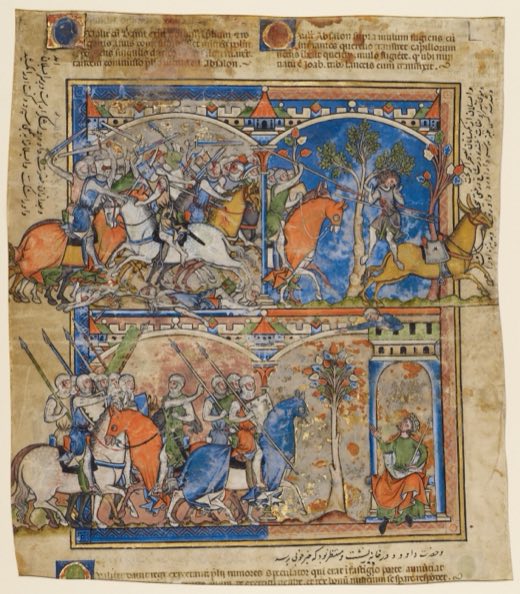 Scenes from the Life of Absalom (Ms. Ludwig I 6, verso, from the Morgan Picture Bible)
See also
- Fortresses and watchtowersBuildings and structures
- The city gateBuildings and structures
- Hours and watchesMoney and measures
- Work in the vineyard: hedges, pruning and watchmenField, orchard and water
- Ahimaaz, son of ZadokPeople
- JehuPeople
Sources: Tyndale Open Bible Dictionary © 2023 Tyndale House Publishers, CC BY-SA 4.0 — adapted and shortened; the original work is available for free at tyndaleopenresources.com · Sources and rights