Encyclopedia › Peoples and gods around Israel
Peoples and gods around Israel
Baal
“Lord, owner, husband” · the storm god Hadad · the myths of Ugarit · Ahab and Elijah
Baal is a common Semitic word meaning “lord,” “owner” or “husband.” Above all it named the storm god Hadad, who brought the rain on which the farms of Canaan depended. In the myths of Ugarit Baal fights Yam, the sea, and Mot, death; he dies and returns and is given a palace. Bronze figures show him striding with a raised arm, holding a weapon. The Bible knows local Baals, such as Baal of Peor (Numbers 25:3) and Baal-berith, “Baal of the covenant,” at Shechem, and speaks of “the Baals” in the plural.
Baal worship runs through the story of Ahab, who married Jezebel of Sidon and set up an altar “in the temple of Baal that he had built in Samaria” (1 Kings 16:32), and of Elijah’s contest on Mount Carmel: “If the LORD is God, follow Him. But if Baal is God, follow him” (1 Kings 18:21). Jehu later “eradicated Baal from Israel” (2 Kings 10:28). Names show the word was also used in Israel: Saul’s son Ish-bosheth is Esh-baal in Chronicles. By one view later scribes replaced baal in names with bosheth, “shame”; others explain the two forms differently.
In art
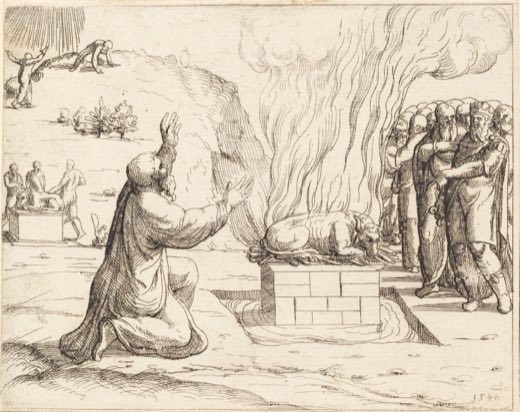 The Rival Sacrifices of Elijah and the Priests of Baal
See also
- Asherah and Astarte (Ashtoreth)Peoples and gods around Israel
- The gods of the nations in the BiblePeoples and gods around Israel
- PhoeniciansPeoples and gods around Israel
- CanaanitesPeoples and gods around Israel
- Temples of other godsTabernacle and temple
- High placesTabernacle and temple
- Names with God’s name in themHuman life in Bible times
- The texts of UgaritAncient texts beside the Bible
- Praying for rainWeather and the forces of nature
- The LORD in the stormWeather and the forces of nature
- Baal-zebub and BeelzebulPeoples and gods around Israel
- Hadad and Rimmon: the storm god of the ArameansPeoples and gods around Israel
- Zaphon: the mountain of the northThe land of the Bible
- AhabPeople
- JezebelPeople
- ElijahPeople
- Ish-boshethPeople
- Mount CarmelPlaces
- SamariaPlaces
Sources: Tyndale Open Bible Dictionary © 2023 Tyndale House Publishers, CC BY-SA 4.0 — adapted and shortened; the original work is available for free at tyndaleopenresources.com · Sources and rights