Encyclopedia › Weather and the forces of nature
Weather and the forces of nature
Locust plagues in history
Swarms of desert locusts from Arabia and Africa · Joel 1–2 · the great plague of 1915
Swarms of desert locusts break out after rare rains in their breeding grounds in Arabia and Africa and are carried by the wind for hundreds of kilometers. A large swarm holds billions of insects and in one day eats as much as a city of people. Such plagues struck Egypt and Canaan again and again, and the Bible counts locusts among the great blows to a harvest, with famine, blight and mildew (1 Kings 8:37). In the eighth plague of Egypt the LORD sent an east wind that brought the locusts, then “a very strong west wind” that blew them into the Red Sea (Exodus 10:13, 19).
Joel describes a plague as if he had watched it: the swarm strips the vine and the fig tree until “the branches have turned white” (Joel 1:7), runs along the walls and climbs into houses, “entering through windows like thieves” (Joel 2:9). In a vision Amos saw the Lord forming swarms of locusts “just after the king’s harvest” (Amos 7:1). The last great plague in the land came in 1915: from March to October swarms stripped fields and orchards from the Negev to Lebanon, and members of the American Colony in Jerusalem photographed it stage by stage. Swarms still break out, as in East Africa in 2020.
In art
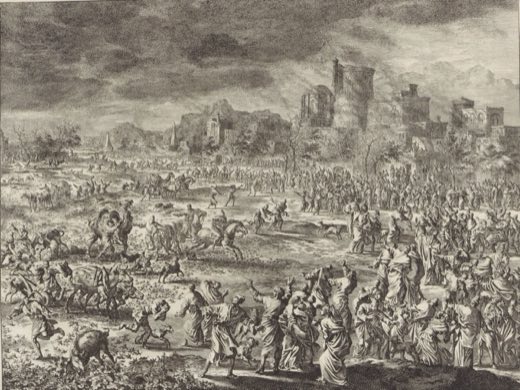 The Plague of Locusts
All verses on this topic
See also
- LocustAnimals of the Bible
- Palmerworm, cankerworm and other locust wordsAnimals of the Bible
- The east wind: sirocco and khamsinWeather and the forces of nature
- Famines in historyWeather and the forces of nature
- Fasts proclaimed in times of dangerFeasts and festivals
- The plagues of Egypt and the land of EgyptWeather and the forces of nature
Sources: Tyndale Open Bible Dictionary © 2023 Tyndale House Publishers, CC BY-SA 4.0 — adapted and shortened; the original work is available for free at tyndaleopenresources.com · Sources and rights