Encyclopedia › Animals of the Bible
Animals of the Bible
Locust
Named in 37 verses of the Bible, in 19 books.
Hebrew arbeh and eight other words · Greek akris · desert and migratory locusts
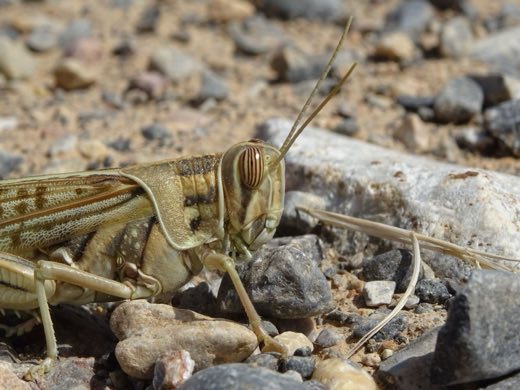
The locust is the insect named most often in the Bible, under nine different Hebrew words. Most of the time a locust lives alone like an ordinary grasshopper, but after good rains huge numbers hatch, crowd together, change color and set off in swarms that can cover many square kilometers. A swarm eats every green thing in its path: in Exodus the locusts covered Egypt “until it was black” and left nothing green on any tree (Exodus 10:15). The young hoppers march in step before they can fly, as Proverbs noticed — “the locusts have no king, yet they all advance in formation” (Proverbs 30:27). Joel 1:4 names four kinds of locust one after another, perhaps the stages of growth of a single swarm.
Locusts were also food. The Law allowed four kinds of locust and grasshopper to be eaten (Leviticus 11:22), and Bedouin still roast or dry them and grind them into flour. John the Baptist lived on “locusts and wild honey” (Matthew 3:4). The great swarms still come out of Arabia and Africa: a plague in 1915 stripped the land of Israel bare.
In nature
How translations render it
The animal’s Hebrew, Aramaic or Greek word and the word each of our Bible translations uses for it, found in its own text in the verses where the original word stands. A translation is left out where its word cannot be told for certain.
אַרְבֶּה’arbeh · Hebrew18 verses
For example: Deut 28:38
| Language | Translation | Word |
|---|---|---|
| English | BSB | locust, swarming locust |
| Русский | СП | саранча, саранчу in 18 of 18 verses |
| Español | RV1909 | langosta, langostas in 18 of 18 verses |
| Deutsch | LUT1912 | Heuschrecken in 17 of 18 verses |
| Français | LSG | sauterelles, sauterelle in 18 of 18 verses |
| Português | BLIVRE | gafanhoto, gafanhotos in 17 of 18 verses |
| Filipino | ULB | balang in 18 of 18 verses |
| Українська | Куліш | сарана, сарани in 18 of 18 verses |
| Kiswahili | ULB | nzige in 16 of 18 verses |
| Italiano | RIV | locuste, locusta in 18 of 18 verses |
| Polski | UBG | szarańcza, szarańczę in 18 of 18 verses |
| Nederlands | HS1917 | sprinkhaan, sprinkhanen in 18 of 18 verses |
| Hrvatski | Šarić | skakavci, skakavce in 17 of 18 verses |
| Română | BOR 1914 | lăcustă, lăcustele in 16 of 18 verses |
| Српски | ДК | скакавци, скакавце in 18 of 18 verses |
| Српски | DK | skakavci, skakavce in 18 of 18 verses |
| Čeština | BKR | kobylky, kobylek in 18 of 18 verses |
| Svenska | SV1917 | gräshoppor, gräshopporna in 18 of 18 verses |
| Igbo | IGCB | igurube in 18 of 18 verses |
| हिन्दी | IRV | टिड्डी in 18 of 18 verses |
| 한국어 | 개역한글 | 메뚜기, 메뚜기가 in 17 of 18 verses |
| 中文(繁體) | 和合本 | 蝗蟲 in 18 of 18 verses |
| 中文(简体) | 和合本简 | 蝗虫 in 18 of 18 verses |
| தமிழ் | IRV | வெட்டுக்கிளி, வெட்டுக்கிளிகளை in 18 of 18 verses |
| తెలుగు | IRV | మిడతలు, మిడతల in 17 of 18 verses |
| বাংলা | IRV | পঙ্গপাল, পঙ্গপালের in 18 of 18 verses |
| मराठी | IRV | टोळ, टोळधाड in 18 of 18 verses |
| ಕನ್ನಡ | IRV | ಮಿಡತೆ, ಮಿಡತೆಯ in 18 of 18 verses |
| ગુજરાતી | IRV | તીડ, તીડની in 18 of 18 verses |
| ਪੰਜਾਬੀ | IRV | ਟਿੱਡੀ, ਟਿੱਡੀਆਂ in 11 of 18 verses |
| ଓଡ଼ିଆ | IRV | ପଙ୍ଗପାଳ in 18 of 18 verses |
| മലയാളം | SVP | വെട്ടുക്കിളി, വെട്ടുക്കിളിയെ in 18 of 18 verses |
| नेपाली | ULB | सलह, सलहहरू in 17 of 18 verses |
| Cebuano | CCB | dulon in 18 of 18 verses |
יֶלֶקyeleq · Hebrew5 verses
For example: Jer 51:14
| Language | Translation | Word |
|---|---|---|
| English | BSB | young locust, locust |
| Deutsch | LUT1912 | Käfer in 5 of 5 verses |
| Nederlands | HS1917 | kevers in 5 of 5 verses |
| ଓଡ଼ିଆ | IRV | ପତଙ୍ଗ in 5 of 5 verses |
חָגָבchagav · Hebrew4 verses
For example: Eccl 12:5
| Language | Translation | Word |
|---|---|---|
| English | BSB | grasshopper |
| Filipino | ULB | tipaklong in 3 of 4 verses |
| Kiswahili | ULB | panzi in 3 of 4 verses |
| Igbo | IGCB | ụkpana in 3 of 4 verses |
| తెలుగు | IRV | మిడతల్లాగా in 3 of 4 verses |
חָסִילchasil · Hebrew4 verses
For example: 1 Kgs 8:37
| Language | Translation | Word |
|---|---|---|
| English | BSB | grasshopper, destroying locust |
| Deutsch | LUT1912 | Raupen in 3 of 4 verses |
| Svenska | SV1917 | gräsmaskar in 4 of 4 verses |
| Igbo | IGCB | ụkpana in 3 of 4 verses |
| 中文(繁體) | 和合本 | 蚱 in 4 of 4 verses |
| 中文(简体) | 和合本简 | 蚱 in 4 of 4 verses |
| తెలుగు | IRV | చీడపురుగు in 3 of 4 verses |
| മലയാളം | SVP | തുള്ളൻ in 4 of 4 verses |
ἀκρίςakris · Greek4 verses
For example: Matt 3:4
| Language | Translation | Word |
|---|---|---|
| English | BSB | locust |
| Español | RV1909 | langostas in 4 of 4 verses |
| Deutsch | LUT1912 | Heuschrecken in 4 of 4 verses |
| Français | LSG | sauterelles in 4 of 4 verses |
| Português | BLIVRE | gafanhotos in 4 of 4 verses |
| Filipino | ULB | balang in 4 of 4 verses |
| Українська | Куліш | сарана in 4 of 4 verses |
| Kiswahili | ULB | nzige in 4 of 4 verses |
| Italiano | RIV | locuste in 4 of 4 verses |
| Polski | UBG | szarańcza in 4 of 4 verses |
| Nederlands | HS1917 | sprinkhanen in 4 of 4 verses |
| Hrvatski | Šarić | skakavci in 4 of 4 verses |
| Српски | ДК | скакавци in 4 of 4 verses |
| Српски | DK | skakavci in 4 of 4 verses |
| Čeština | BKR | kobylky in 4 of 4 verses |
| Svenska | SV1917 | gräshoppor in 4 of 4 verses |
| Igbo | IGCB | Igurube in 4 of 4 verses |
| हिन्दी | IRV | टिड्डियाँ in 4 of 4 verses |
| 中文(繁體) | 和合本 | 蝗蟲 in 4 of 4 verses |
| 中文(简体) | 和合本简 | 蝗虫 in 4 of 4 verses |
| தமிழ் | IRV | வெட்டுக்கிளிகள் in 4 of 4 verses |
| తెలుగు | IRV | మిడతల, మిడతలు in 4 of 4 verses |
| বাংলা | IRV | পঙ্গপাল in 4 of 4 verses |
| मराठी | IRV | टोळ in 4 of 4 verses |
| ಕನ್ನಡ | IRV | ಮಿಡತೆ in 4 of 4 verses |
| ગુજરાતી | IRV | તીડ in 4 of 4 verses |
| ਪੰਜਾਬੀ | IRV | ਟਿੱਡੇ, ਟਿੱਡੀਆਂ in 4 of 4 verses |
| ଓଡ଼ିଆ | IRV | ପଙ୍ଗପାଳ in 4 of 4 verses |
| മലയാളം | SVP | വെട്ടുക്കിളി, വെട്ടുക്കിളിയും in 4 of 4 verses |
| नेपाली | ULB | सलह, सलहहरू in 4 of 4 verses |
| Cebuano | CCB | dulon in 4 of 4 verses |
In art
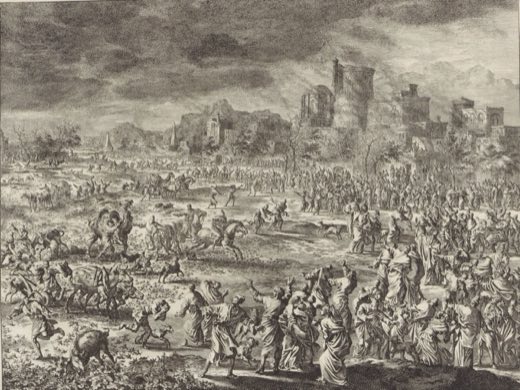 The Plague of Locusts
All verses with this animal (37)
Where the Hebrew, Aramaic or Greek word for it stands in the text.
Exodus5
But if you refuse to let My people go, I will bring locusts into your territory tomorrow.Then the LORD said to Moses, “Stretch out your hand over the land of Egypt, so that the locusts may swarm over it and devour every plant in the land—everything that the hail has left behind.”So Moses stretched out his staff over the land of Egypt, and throughout that day and night the LORD sent an east wind across the land. By morning the east wind had brought the locusts.The locusts swarmed across the land and settled over the entire territory of Egypt. Never before had there been so many locusts, and never again will there be.And the LORD changed the wind to a very strong west wind that carried off the locusts and blew them into the Red Sea. Not a single locust remained anywhere in Egypt.Leviticus1
Of these you may eat any kind of locust, katydid, cricket, or grasshopper.Numbers1
We even saw the Nephilim there—the descendants of Anak that come from the Nephilim! We seemed like grasshoppers in our own sight, and we must have seemed the same to them!”Deuteronomy2
You will sow much seed in the field but harvest little, because the locusts will consume it.Swarms of locusts will consume all your trees and the produce of your land.Judges2
For the Midianites came with their livestock and their tents like a great swarm of locusts. They and their camels were innumerable, and they entered the land to ravage it.Now the Midianites, Amalekites, and all the other people of the east had settled in the valley like a swarm of locusts, and their camels were as countless as the sand on the seashore.1 Kings1
When famine or plague comes upon the land, or blight or mildew or locusts or grasshoppers, or when their enemy besieges them in their cities, whatever plague or sickness may come,2 Chronicles2
When famine or plague comes upon the land, or blight or mildew or locusts or grasshoppers, or when their enemies besiege them in their cities, whatever plague or sickness may come,If I close the sky so there is no rain, or if I command the locust to devour the land, or if I send a plague among My people,Job1
Do you make him leap like a locust, striking terror with his proud snorting?Psalms3
He gave their crops to the grasshopper, the fruit of their labor to the locust.He spoke, and the locusts came— young locusts without number.I am fading away like a lengthening shadow; I am shaken off like a locust.Proverbs1
the locusts have no king, yet they all advance in formation;Ecclesiastes1
when men fear the heights and dangers of the road, when the almond tree blossoms, the grasshopper loses its spring, and the caper berry shrivels— for then man goes to his eternal home and mourners walk the streets.Isaiah3
Woe to the land of whirring wings, along the rivers of Cush,Your spoil, O nations, is gathered as by locusts; like a swarm of locusts men sweep over it.He sits enthroned above the circle of the earth; its dwellers are like grasshoppers. He stretches out the heavens like a curtain, and spreads them out like a tent to dwell in.Jeremiah3
They will chop down her forest, declares the LORD, dense though it may be, for they are more numerous than locusts; they cannot be counted.The LORD of Hosts has sworn by Himself: “Surely I will fill you up with men as with locusts, and they will shout in triumph over you.”“Raise a banner in the land! Blow the ram’s horn among the nations! Prepare the nations against her. Summon the kingdoms against her— Ararat, Minni, and Ashkenaz. Appoint a captain against her; bring up horses like swarming locusts.Joel2
What the devouring locust has left, the swarming locust has eaten; what the swarming locust has left, the young locust has eaten; and what the young locust has left, the destroying locust has eaten.I will repay you for the years eaten by locusts— the swarming locust, the young locust, the destroying locust, and the devouring locust— My great army that I sent against you.Amos2
“I struck you with blight and mildew in your growing gardens and vineyards; the locust devoured your fig and olive trees, yet you did not return to Me,” declares the LORD.This is what the Lord GOD showed me: He was preparing swarms of locusts just after the king’s harvest, as the late spring crop was coming up.Nahum3
There the fire will devour you; the sword will cut you down and consume you like a young locust. Make yourself many like the young locust; make yourself many like the swarming locust!You have multiplied your merchants more than the stars of the sky. The young locust strips the land and flies away.Your guards are like the swarming locust, and your scribes like clouds of locusts that settle on the walls on a cold day. When the sun rises, they fly away, and no one knows where.Matthew1
John wore a garment of camel’s hair, with a leather belt around his waist. His food was locusts and wild honey.Mark1
John was clothed in camel’s hair, with a leather belt around his waist. His food was locusts and wild honey.All verses on this topic
See also
- AntAnimals of the Bible
- Rock hyrax and hareAnimals of the Bible
- LizardsAnimals of the Bible
- Palmerworm, cankerworm and other locust wordsAnimals of the Bible
- Locust plagues in historyWeather and the forces of nature
- Locusts, wild honey and food from the wildFood and drink
Questions and answers
How many times does the Bible mention the locust?
The Bible names the locust in 37 verses — the verses where its Hebrew, Aramaic or Greek word stands in the text, in 19 books.
What is the Hebrew or Greek word for the locust in the Bible?
אַרְבֶּה (’arbeh, Hebrew) — in 21 verses; יֶלֶק (yeleq, Hebrew) — in 7 verses; חָסִיל (chasil, Hebrew) — in 6 verses; חָגָב (chagav, Hebrew) — in 5 verses.
In which books of the Bible is the locust mentioned?
Most often in Exodus (5), Psalms (3), Isaiah (3); in 19 books in all.
Is the locust clean or unclean in the Law?
In the lists of clean and unclean animals (Leviticus 11, Deuteronomy 14): locust (’arbeh) — clean, Lev 11:22.
How do Bible translations render the word?
אַרְבֶּה (’arbeh): English (BSB) “locust”, Русский (СП) “саранча”, Español (RV1909) “langosta”, Deutsch (LUT1912) “Heuschrecken”, Français (LSG) “sauterelles”, Português (BLIVRE) “gafanhoto”, Filipino (ULB) “balang”.
Sources: Tyndale Open Bible Dictionary © 2023 Tyndale House Publishers, CC BY-SA 4.0 — adapted and shortened; the original work is available for free at tyndaleopenresources.com · Animals in the Bible © United Bible Societies 2025, adapted from E. R. Hope, All Creatures Great and Small © 2005 UBS, CC BY-SA 4.0 · Sources and rights