Encyclopedia › How the Bible’s world is studied
How the Bible’s world is studied
How a biblical place is identified
Old names kept in Arabic · Robinson and Smith, 1838 · an inscription naming the place
Most towns of the Bible lost their names long ago, and finding them is detective work. In 1838 the American scholar Edward Robinson and the missionary Eli Smith traveled the land listening for old names in the Arabic names of villages and ruins: el-Jib for Gibeon, Beitin for Bethel, Anata for Anathoth. Their book of 1841 began modern biblical geography. A name alone is not enough, for names moved with people, and the Bible itself tells of places renamed: Jacob “called that place Bethel, though previously the city had been named Luz” (Genesis 28:19). Scholars ask whether a site fits the text — its distance from other towns, its springs and roads — and whether people lived there at the right time.
The surest evidence is writing found in the ground. At el-Jib in 1956–1957 excavators found dozens of jar handles inscribed with the name Gibeon; at Tel Dan a dedication in Greek and Aramaic “to the god who is in Dan” came to light in 1976; stones carved with the words “boundary of Gezer” mark the fields of that city. Where there is no such evidence, scholars weigh the possibilities and often disagree: Emmaus, “about seven miles from Jerusalem” (Luke 24:13), has several candidates, and the site of Ai has long been debated. That is why good maps say of each place whether its site is known, likely or uncertain.
In art
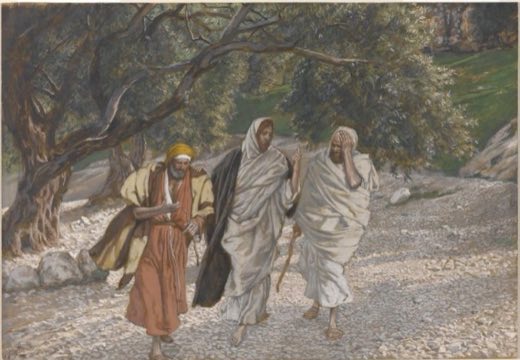 The Pilgrims of Emmaus on the Road (Les pèlerins d'Emmaüs en chemin)James Tissot
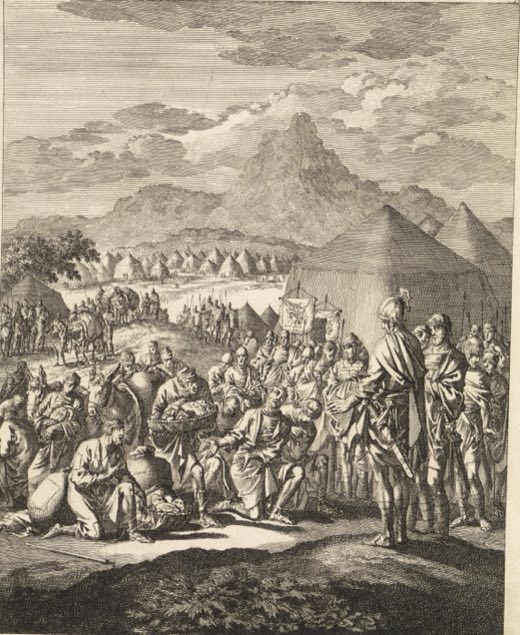 The Gibeonites Deceive JoshuaJan Luyken
See also
- Tells: hills of ruined townsBuildings and structures
- Walking the land: surveysHow the Bible’s world is studied
- The road to EmmausRoads and travel
- Ai: a defeat and an ambushWeapons and warfare
- Biblical archaeology and its debatesHow the Bible’s world is studied
- PlacesExplore · How it looked in the 1890s
- GibeonPlaces
- BethelPlaces
- DanPlaces
- GezerPlaces
- EmmausPlaces
- AiPlaces
Sources: Tyndale Open Bible Dictionary © 2023 Tyndale House Publishers, CC BY-SA 4.0 — adapted and shortened; the original work is available for free at tyndaleopenresources.com · Sources and rights