Encyclopedia › How the Bible’s world is studied
How the Bible’s world is studied
The En-Gedi scroll: reading without unrolling
Found 1970 in a burnt synagogue · scanned in 2015 · the opening of Leviticus
In 1970 the excavators of the ancient synagogue at En-Gedi, on the western shore of the Dead Sea, found in the burnt remains of its ark lumps of charred scroll. The synagogue had burned about the 6th century AD, and the scrolls were like charcoal: to touch them was to destroy them, and for 45 years no one could read a word. In 2015 one of them was scanned in Israel by micro-computed tomography, the kind of X-ray imaging used in medicine but far finer, and the American computer scientist Brent Seales and his team at the University of Kentucky unwrapped it in the computer, following each layer of the rolled skin and laying it flat in an image.
The text that appeared, published in 2016, was the beginning of Leviticus: “Then the LORD called to Moses and spoke to him from the Tent of Meeting” (Leviticus 1:1). Its letters agree with the consonants of the Masoretic text that Hebrew Bibles follow today. The scroll’s age is debated: radiocarbon dated it to about the 3rd–4th centuries AD, while some experts in ancient handwriting place it in the 1st or 2nd century. The same method is now used on the carbonized scrolls of Herculaneum, buried by Vesuvius in AD 79. “Open my eyes that I may see wondrous things from Your law,” prays the psalmist (Psalm 119:18).
In art
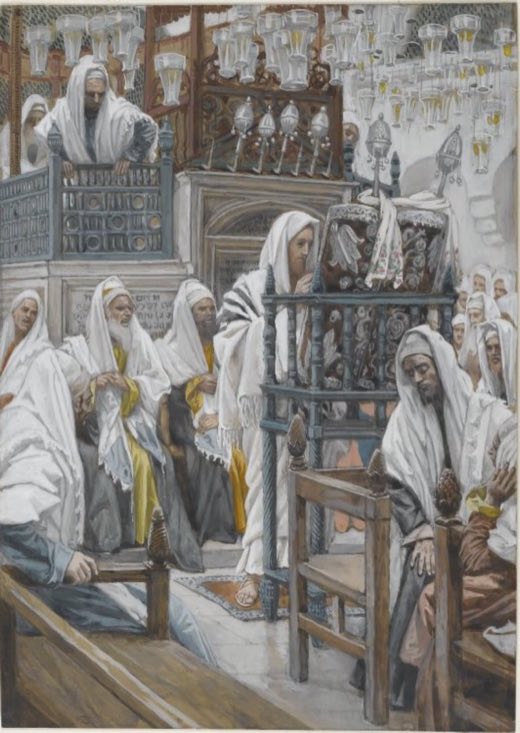 Jesus Unrolls the Book in the Synagogue (Jésus dans la synagogue déroule le livre)
See also
- The Masoretic TextHow the Bible came to be
- SynagogueTabernacle and temple
- Seeing faded inkHow the Bible’s world is studied
- En-gediPlaces
Sources: Tyndale Open Bible Dictionary © 2023 Tyndale House Publishers, CC BY-SA 4.0 — adapted and shortened; the original work is available for free at tyndaleopenresources.com · Sources and rights