Encyclopedia › How the Bible’s world is studied
How the Bible’s world is studied
Forgeries and how they are caught
Shapira’s strips, 1883 · sixteen fake scroll fragments, 2020 · where was it found?
Where old objects fetch high prices, forgers follow. In 1883 the Jerusalem antiquities dealer Moses Wilhelm Shapira offered the British Museum leather strips with a text of Deuteronomy in Old Hebrew letters, said to come from a cave by the Dead Sea. Scholars, among them Charles Clermont-Ganneau and Christian David Ginsburg, declared them forgeries, and the strips were later lost. In 2021 one scholar argued that they may have been genuine after all; most remain unconvinced, and without the strips the question cannot be tested.
From 2002 small pieces said to be Dead Sea Scrolls appeared on the market. In 2020 a team of experts reported that all sixteen such fragments bought by the Museum of the Bible in Washington were modern forgeries: the letters had been written on old leather with modern ink, which pooled in the cracks. Scientists test the material, the ink and the marks of tools; scholars check the language and the letters for mistakes an ancient scribe would not make. Above all, they ask where an object was found: things uncovered in a recorded excavation, in their own layer, are trusted far more than those that surface on the antiquities market. The Law asks for honesty in all things: “You shall not have two differing weights in your bag” (Deuteronomy 25:13), and “You shall not spread a false report” (Exodus 23:1).
In art
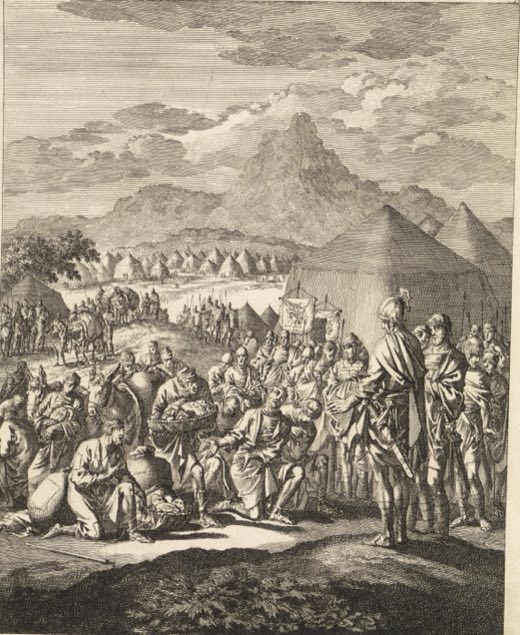 The Gibeonites Deceive Joshua
See also
- The Dead Sea ScrollsHow the Bible came to be
- Seal impressions with names from the BibleTrade, craft and color
- Scales and weightsMoney and measures
- Sifting the soil of the Temple MountHow the Bible’s world is studied
Sources: Tyndale Open Bible Dictionary © 2023 Tyndale House Publishers, CC BY-SA 4.0 — adapted and shortened; the original work is available for free at tyndaleopenresources.com · Sources and rights