Encyclopedia › How the Bible’s world is studied
How the Bible’s world is studied
Digging by layers
What lies higher is later · Petrie at Tell el-Hesi, 1890 · squares, balks and loci
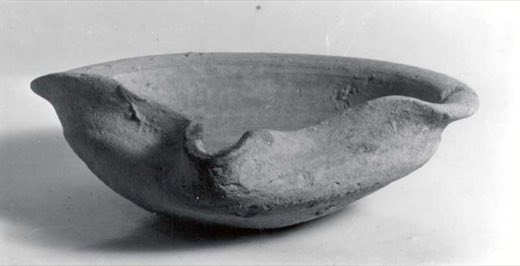
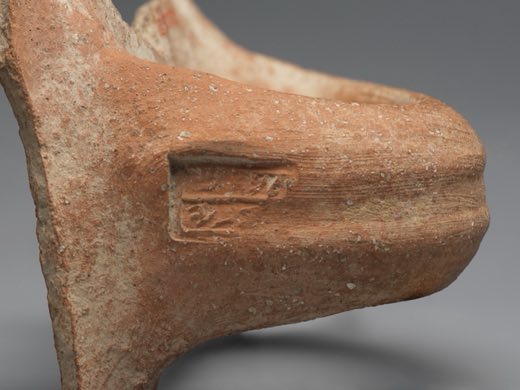
On a tell the town of each age stands on the ruins of the one before, so the mound can be read like a book from the top down: what lies higher is later, unless a pit, a grave or a foundation trench has been dug into older ground. The first to put this to work in the Holy Land was Flinders Petrie. In 1890, at Tell el-Hesi in the Shephelah, he cut into the side of the mound where a stream had worn it away and saw that each level had pottery of its own; Egyptian objects among them gave him dates. At Samaria in 1908–1910 George Reisner recorded the layers of earth and debris with new care.
Mortimer Wheeler and Kathleen Kenyon later dug in squares, leaving walls of untouched earth between them, the balks, whose upright faces show the order of the layers; Kenyon used the method at Jericho in 1952–1958 and in Jerusalem in 1961–1967. Every layer, floor or pit receives a number, a locus, and every find is labeled with it. Digging destroys what it uncovers, so the record is all that remains, and many excavators leave part of a site untouched for those who come later. When Nehemiah’s enemies mocked the builders — “Can they bring these burnt stones back to life from the mounds of rubble?” (Nehemiah 4:2) — they spoke of such heaps. The psalm says of Zion: “Your servants delight in her stones and take pity on her dust” (Psalm 102:14).
In art
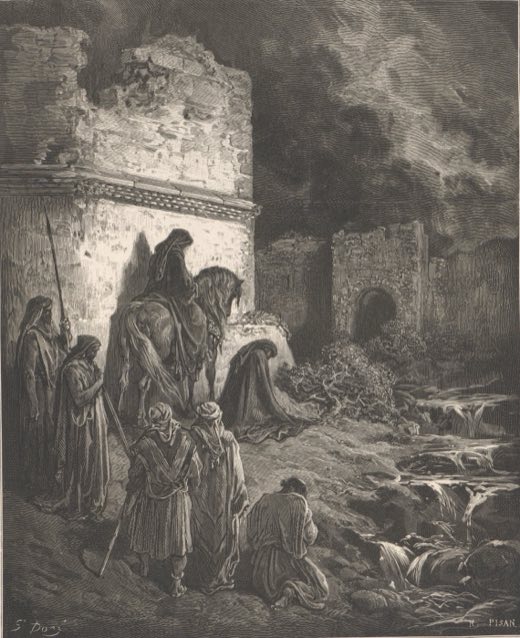 Nehemiah Views the Ruined Walls of Jerusalem
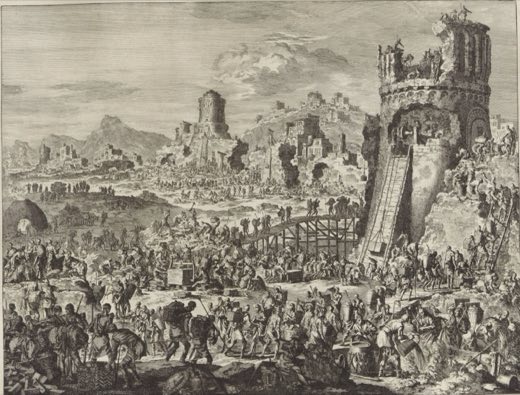 The Walls of Jerusalem Rebuilt
See also
- Tells: hills of ruined townsBuildings and structures
- Bronze Age, Iron Age: how archaeologists name the timesTrade, craft and color
- Potsherds as a clockHow the Bible’s world is studied
- Fixed points: kings, coins and stamped handlesHow the Bible’s world is studied
- The Millo and the stepped stone structureBuildings and structures
- Earthquakes in the groundHow the Bible’s world is studied
- Sifting the soil of the Temple MountHow the Bible’s world is studied
- Biblical archaeology and its debatesHow the Bible’s world is studied
Sources: Tyndale Open Bible Dictionary © 2023 Tyndale House Publishers, CC BY-SA 4.0 — adapted and shortened; the original work is available for free at tyndaleopenresources.com · Sources and rights