Encyclopedia › How the Bible’s world is studied
How the Bible’s world is studied
Burnt clay and the earth’s magnetism
Heated clay keeps a record of the magnetic field · used to date destruction layers
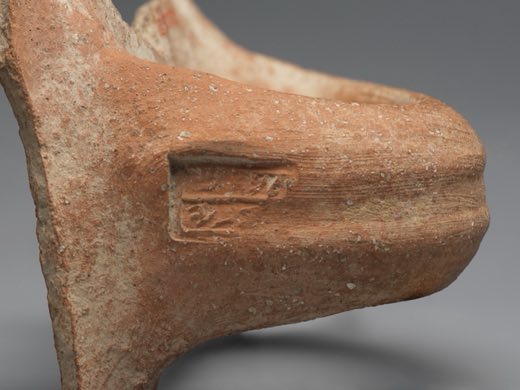
The earth’s magnetic field is not fixed: its strength and direction drift over decades and centuries. When clay, mud brick or the slag of a furnace is heated in a fire and then cools, tiny grains of iron minerals in it line up with the field of that moment and keep a record of it. From objects of known date — among them jar handles stamped under the kings of Judah, and layers of copper slag from the Arabah dated by radiocarbon — scientists of the Hebrew University and Tel Aviv University have built a curve of the field over the land of Israel. It shows that in the Iron Age the field there was at times much stronger than today and changed quickly, which makes it a fine clock for those centuries.
The method suits burnt destruction layers, of which the Bible tells many. A study published in 2022 measured burnt bricks and pottery from 21 destruction layers at 17 sites in Israel and asked which known campaign each belonged to — the wars of the Arameans, the Assyrians and the Babylonians. At Gath it agreed with the destruction by Hazael: “Hazael king of Aram marched up and fought against Gath and captured it” (2 Kings 12:17). Elsewhere it favored one proposed date over another, or left the question open. The burnt rooms of Jerusalem from 586 BC, when the Babylonians “burned down the house of the LORD, the royal palace, and all the houses of Jerusalem” (2 Kings 25:9), have been measured in the same way.
In art
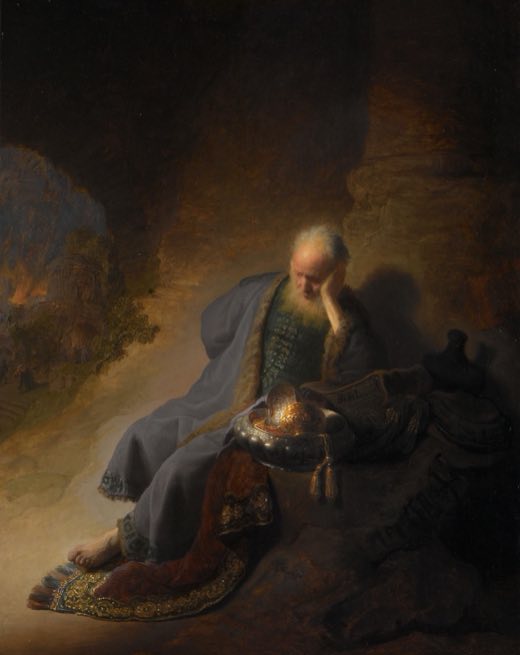 Jeremiah Lamenting the Destruction of Jerusalem
See also
- Radiocarbon datingHow the Bible’s world is studied
- The siege and fall of Jerusalem, 587/586 BCWeapons and warfare
- Timna and Faynan: the copper of the ArabahTrade, craft and color
Sources: Tyndale Open Bible Dictionary © 2023 Tyndale House Publishers, CC BY-SA 4.0 — adapted and shortened; the original work is available for free at tyndaleopenresources.com · Sources and rights