Encyclopedia › Rulers around the Bible
Rulers around the Bible
Domitian
Emperor AD 81–96 · “lord and god” · the Jewish tax enforced harshly · Revelation’s background
Domitian, the younger son of Vespasian, succeeded his brother Titus in AD 81 and ruled for fifteen years until he was murdered in his palace in 96. Roman writers who lived after him — Suetonius, Tacitus and Pliny the Younger — remember a suspicious and cruel ruler, especially in his last years; modern historians note that he was also an able administrator and that the senators who wrote about him hated him. Suetonius says he liked to be called “our lord and god” and that the Jewish tax was collected with great severity, even by examining old men to see if they were circumcised.
In 95 he executed his cousin Flavius Clemens, a consul, and banished Clemens’s wife Domitilla, on a charge of “atheism” and drifting into Jewish ways; later Christian tradition counted them as Christians. Early writers from Irenaeus on date John’s exile “on the island of Patmos” (Revelation 1:9) and the writing of Revelation to the end of Domitian’s reign, and Eusebius tells of a persecution under him. How widespread that persecution was is debated: no Roman source mentions an empire-wide one, and some scholars date Revelation earlier, under Nero. The emperor cult in the cities of Asia, with temples to the Flavian emperors at Ephesus, is often read as the background of Revelation’s beast.
In art
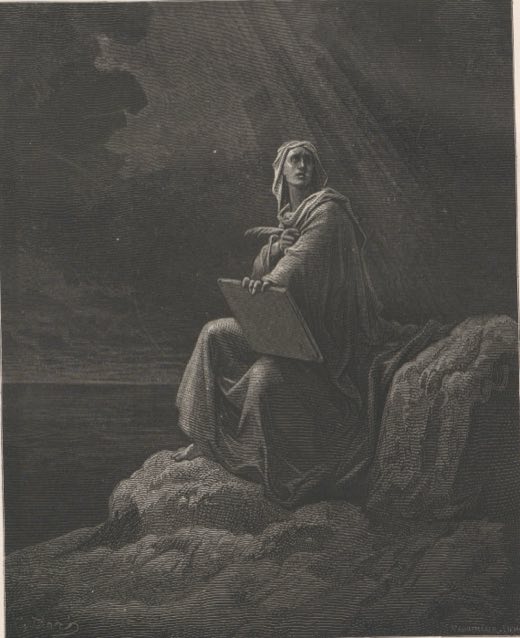 John on Patmos
See also
- Vespasian and TitusRulers around the Bible
- NeroRulers around the Bible
- Asiarchs and the worship of the emperorThe Greek world of Paul
- How Revelation was writtenHow the Bible came to be
- Ephesus: the city of ArtemisCities of the Bible
- PatmosPlaces
Scholars disagree
Sources: Tyndale Open Bible Dictionary © 2023 Tyndale House Publishers, CC BY-SA 4.0 — adapted and shortened; the original work is available for free at tyndaleopenresources.com · Sources and rights