Encyclopedia › Plants of the Bible
Plants of the Bible
Willow and poplar
Hebrew ’aravah, livneh · Salix, Populus · trees of riverbanks and streams
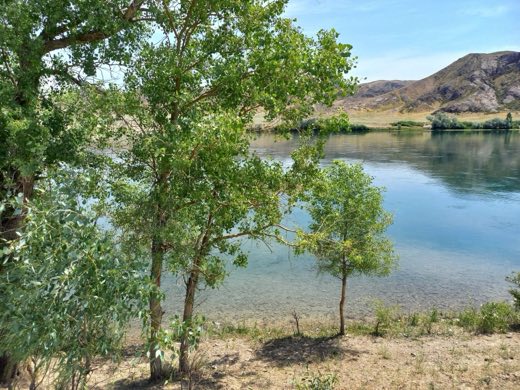
Willows grow along streams, where they reach about six meters, with long narrow leaves that fall in winter. Poplars share the same wet places but grow taller. Two were common in the land: the white poplar, with silvery leaves and light wood, and the Euphrates poplar, which grows along the Jordan and the rivers of Mesopotamia and has narrow, willow-like leaves on its young shoots. Because of that, scholars disagree over which Hebrew word means which tree.
At the Feast of Booths the people were to take “willows of the brook” with palm branches and other boughs (Leviticus 23:40), and the prophets use the willow by running water as a picture of plenty. The exiles in Babylon “hung our harps” on trees by its rivers (Psalm 137:2); by one view these were willows, as most Bibles say, by another the Euphrates poplars that line those rivers. Jacob peeled branches of poplar, almond and plane to show the white wood beneath, and Hosea names the poplar with the oak and terebinth for its shade.
In nature
All verses with this plant (11)
Where the Hebrew, Aramaic or Greek word for it stands in the text.
Genesis1
Jacob, however, took fresh branches of poplar, almond, and plane trees, and peeled the bark, exposing the white inner wood of the branches.Leviticus1
On the first day you are to gather the fruit of majestic trees, the branches of palm trees, and the boughs of leafy trees and of willows of the brook. And you are to rejoice before the LORD your God for seven days.2 Samuel2
So David inquired of the LORD, who answered, “Do not march straight up, but circle around behind them and attack them in front of the balsam trees.As soon as you hear the sound of marching in the tops of the balsam trees, move quickly, because this will mean that the LORD has marched out before you to strike the camp of the Philistines.”1 Chronicles2
So David again inquired of God, who answered him, “Do not march up after them, but circle around them and attack them in front of the balsam trees.As soon as you hear the sound of marching in the tops of the balsam trees, move out to battle, because this will mean that God has marched out before you to strike the camp of the Philistines.”Job1
The lotus plants conceal him in their shade; the willows of the brook surround him.Psalms1
There on the willows we hung our harps,Isaiah2
So they carry their wealth and belongings over the Brook of the Willows.They will sprout among the grass like willows by flowing streams.Ezekiel1
He took some of the seed of the land and planted it in fertile soil; he placed it by abundant waters and set it out like a willow.See also
- Almond treePlants of the Bible
- MyrtlePlants of the Bible
- Plane treePlants of the Bible
- Mulberry and balsam treesPlants of the Bible
- Lotus plantsPlants of the Bible
- Feast of BoothsFeasts and festivals
- The four species of the Feast of BoothsPlants of the Bible
Sources: Tyndale Open Bible Dictionary © 2023 Tyndale House Publishers, CC BY-SA 4.0 — adapted and shortened; the original work is available for free at tyndaleopenresources.com · Plants and Trees in the Bible © United Bible Societies 2025, adapted from R. Koops, Each According to its Kind © 2012 UBS, CC BY-SA 4.0 · Sources and rights