Encyclopedia › Human life in Bible times
Human life in Bible times
Mourning and lament
Torn clothes, dust and sackcloth · seven or thirty days · wailing women and flute players
Grief was shown openly. When he heard of Saul’s death, David “took hold of his own clothes and tore them”, and his men “mourned and wept and fasted until evening” (2 Samuel 1:11–12). Mourners put on sackcloth, sat on the ground, sprinkled dust on their heads (Joshua 7:6), went barefoot and left their hair uncombed. Jacob was mourned for seven days at the threshing floor of Atad (Genesis 50:10), Moses for thirty days (Deuteronomy 34:8). The Law forbade some customs of the neighbours: “You must not make any cuts in your bodies for the dead” (Leviticus 19:28).
Lament was a craft. Jeremiah calls for “the wailing women … the most skillful among them” (Jeremiah 9:17), and in the house of the synagogue leader Jesus found “the flute players and the noisy crowd” (Matthew 9:23); the Mishnah later says that even a poor man should hire two flutes and a wailing woman for his wife’s burial. A lament was a sung poem with a halting beat, like David’s over Saul and Jonathan, “How the mighty have fallen!” (2 Samuel 1:19); the book of Lamentations holds five more. Neighbours brought the mourners bread and “a cup of consolation” (Jeremiah 16:7).
In art
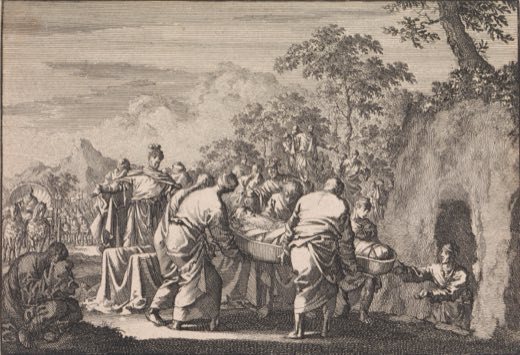 The Burial of JacobJan Luyken
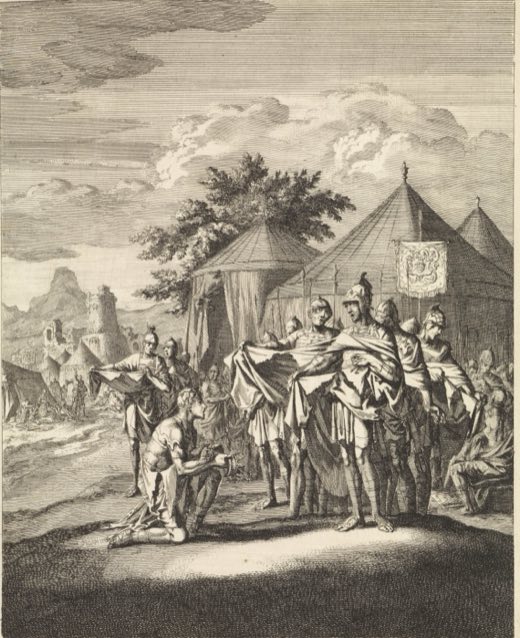 David Hears of Saul’s DeathJan Luyken
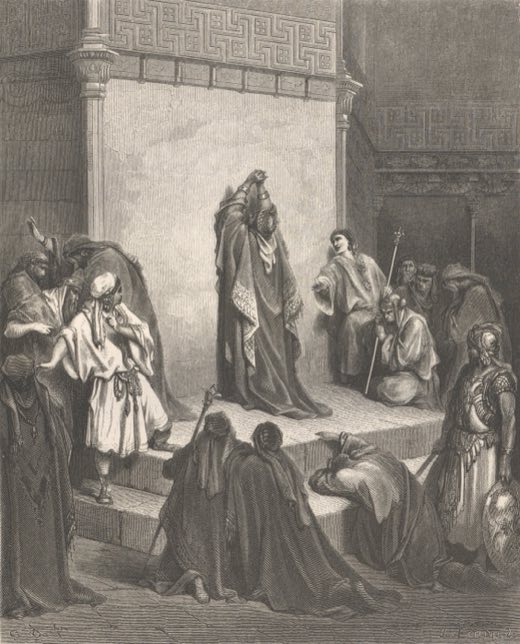 David Mourns for AbsalomGustave Doré
All verses on this topic
See also
- Tombs and burialHome and family
- SackclothClothing and adornment
- Blessings and last wordsHuman life in Bible times
- Pipe and fluteMusic and instruments
- Tearing one’s clothes and widow’s garmentsClothing and adornment
- Beards and shavingClothing and adornment
- Laments and dirgesMusic and instruments
- Threshing floors in the Bible’s storiesField, orchard and water
- Graves and epitaphs in the Greek citiesThe Greek world of Paul
- Friends and friendshipHuman life in Bible times
- Brahms’s A German RequiemThe Bible in culture
- AtadPlaces
Sources: Tyndale Open Bible Dictionary © 2023 Tyndale House Publishers, CC BY-SA 4.0 — adapted and shortened; the original work is available for free at tyndaleopenresources.com · Sources and rights