Encyclopedia › Human life in Bible times
Human life in Bible times
Bowing, kissing and other gestures
Bowing to the ground · the kiss · striking hands · the sandal · shaking off dust
Respect was shown with the whole body. Jacob, afraid of his brother, “bowed to the ground seven times as he approached” — and Esau ran to him, “threw his arms around his neck, and kissed him” (Genesis 33:3–4). People bowed with their faces to the ground before kings and great men, and Egyptian and Assyrian pictures show foreign envoys doing the same. Kissing was a greeting between relatives and friends, men included. Absalom won hearts at the city gate by refusing to let men bow: he would “take hold of him, and kiss him” (2 Samuel 15:5). Jesus told His host Simon, “You did not greet Me with a kiss” (Luke 7:45), and Judas betrayed Him with one (Luke 22:48). Paul ended letters with “Greet one another with a holy kiss” (Romans 16:16).
Hands and feet sealed agreements. A man who “struck hands in pledge” became guarantor for another’s debt (Proverbs 6:1). Abraham’s servant swore an oath with his hand “under my thigh” (Genesis 24:2). In Ruth’s day, to confirm a sale of land “a man would remove his sandal and give it to the other party” (Ruth 4:7). Tearing one’s clothes and throwing dust on the head showed grief. Jesus told His messengers that where they were not welcomed they should “shake the dust off your feet” (Matthew 10:14), and Paul and Barnabas did so when they left Pisidian Antioch (Acts 13:51).
In art
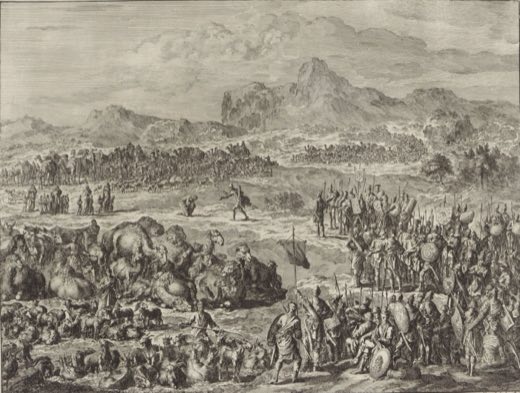 Jacob and Esau Meet
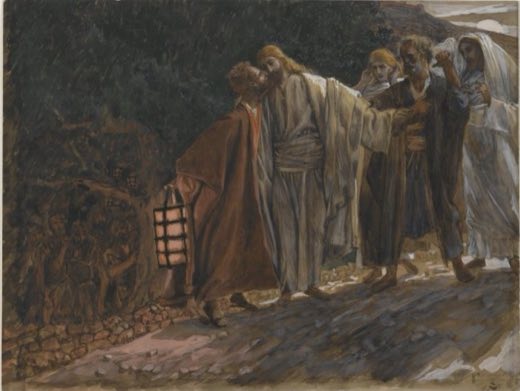 The Kiss of Judas (Le baiser de Judas)
See also
- Greetings on the roadRoads and travel
- Friends and friendshipHuman life in Bible times
- Tearing one’s clothes and widow’s garmentsClothing and adornment
- Honor and shameHuman life in Bible times
- Debts, loans and pledgesHuman life in Bible times
- Witnesses and oathsHuman life in Bible times
Sources: Tyndale Open Bible Dictionary © 2023 Tyndale House Publishers, CC BY-SA 4.0 — adapted and shortened; the original work is available for free at tyndaleopenresources.com · Sources and rights