Encyclopedia › Languages of the Bible
Languages of the Bible
Wordplay that works only in Hebrew
adam and adamah · ish and ishshah · qayits and qets · shaqed and shoqed
Hebrew writers liked to play on the sound of words, and much of it is lost in translation. The first man, adam, is formed from the ground, adamah (Genesis 2:7). The woman is called ishshah because she was taken out of man, ish (Genesis 2:23) — a pun that some languages can copy. Babel is explained by balal, “to confuse” (Genesis 11:9), though in Babylon itself the name was understood as “gate of the god”.
The prophets used wordplay to make a message stick. Amos sees a basket of summer fruit, qayits, and hears that the end, qets, has come for Israel (Amos 8:2). Jeremiah sees a branch of almond, shaqed, the tree that blossoms first in spring, and the LORD says that he is watching, shoqed, over his word (Jeremiah 1:11–12). Isaiah’s song of the vineyard ends with two pairs: God looked for mishpat, “justice”, but saw mispach, “bloodshed”; for tsedaqah, “righteousness”, but heard tseaqah, “a cry” (Isaiah 5:7). Many names in Genesis are explained in the same way, by their sound rather than by their origin.
In art
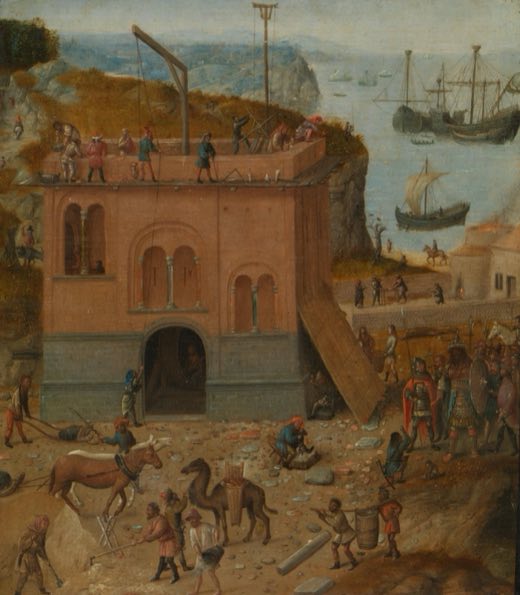 The Tower of Babel
See also
- What a name saidHuman life in Bible times
- What place names meantHuman life in Bible times
- How Hebrew worksLanguages of the Bible
- Words for sinThe seven deadly sins
- East in front: how the Bible names directionsRoads and travel
- Babel and the many languagesLanguages of the Bible
- Amos (Amos)People
- JeremiahPeople
Sources: Tyndale Open Bible Dictionary © 2023 Tyndale House Publishers, CC BY-SA 4.0 — adapted and shortened; the original work is available for free at tyndaleopenresources.com · Sources and rights