Encyclopedia › Field, orchard and water
Field, orchard and water
Joseph’s granaries: seven years of plenty
A fifth of the harvest stored · grain “like the sand of the sea”
Egypt lived by the Nile’s yearly flood, and when the river failed, so did the harvest. Pharaoh’s dream of seven fat cows and seven thin ones warned of such a time, and Joseph advised him to “appoint commissioners over the land to take a fifth of the harvest of Egypt during the seven years of abundance … that they may come and lay up the grain to be preserved as food in the cities” (Genesis 41:34–35). He was put in charge, and “in every city he laid up the food from the fields around it” (Genesis 41:48); the grain was “like the sand of the sea”, so much “that he stopped keeping track of it” (Genesis 41:49).
When the famine came, “Joseph opened up all the storehouses and sold grain to the Egyptians” (Genesis 41:56), and people from other lands came to buy, among them his own brothers from Canaan. As the hungry years went on, the Egyptians gave their silver, then their livestock and their land for grain, and Joseph gave them seed on the condition that a fifth of every harvest go to Pharaoh (Genesis 47:23–24). Egyptian tomb paintings and models show rows of round granaries filled from the top by a ladder and emptied by a small door below, and scribes counting the grain as it went in.
In art
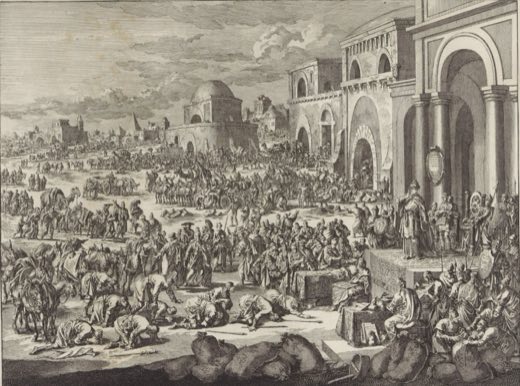 Joseph Sells Grain to His Brothers
See also
- Famines in historyWeather and the forces of nature
- Storehouses, granaries and archivesBuildings and structures
- The Nile: the river that made EgyptThe land of the Bible
- Wheat and barleyPlants of the Bible
- The pharaohs of Abraham and JosephRulers around the Bible
- JosephPeople
- EgyptPlaces
Sources: Tyndale Open Bible Dictionary © 2023 Tyndale House Publishers, CC BY-SA 4.0 — adapted and shortened; the original work is available for free at tyndaleopenresources.com · Sources and rights