Encyclopedia › Trade, craft and color
Trade, craft and color
Bargaining and fair dealing
“Worthless, worthless!” says the buyer · Abraham and Ephron · “do not take advantage”
Prices in the market were set by talking. Proverbs catches the buyer in the act: “‘Worthless, worthless!’ says the buyer, but on the way out, he gloats” (Proverbs 20:14). The longest bargaining scene in the Bible is Abraham’s purchase of the cave of Machpelah. Ephron the Hittite first offers the field as a gift, then names his price as if it were nothing: “The land is worth four hundred shekels of silver, but what is that between you and me?” Abraham weighs out the full sum “according to the standard of the merchants” before witnesses at the city gate (Genesis 23:15–16). David likewise refused Araunah’s offer of his threshing floor for free: “I will not offer to the LORD my God burnt offerings that cost me nothing” (2 Samuel 24:24).
The Law asked for honesty on both sides: “If you make a sale to your neighbor or a purchase from him, you must not take advantage of each other” (Leviticus 25:14). The prophets attacked the traders who could not wait for the Sabbath to end so they could “reduce the ephah and increase the shekel” — selling short measure for heavy silver (Amos 8:5). The capable wife of Proverbs “appraises a field and buys it” with her own earnings (Proverbs 31:16), and Jesus told of a merchant who found one precious pearl and “sold all he had and bought it” (Matthew 13:46).
In art
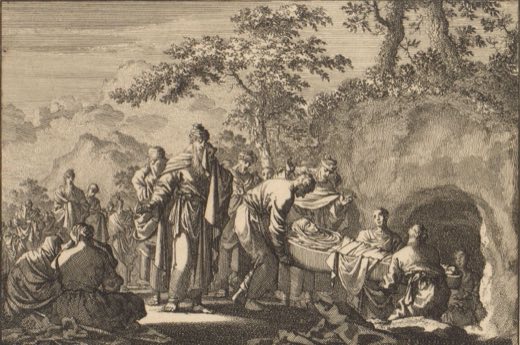 The Burial of Sarah
See also
- Merchants and peddlersTrade, craft and color
- Scales and weightsMoney and measures
- Buying a fieldHuman life in Bible times
- Squares and marketplacesBuildings and structures
- HonestyVirtues
- Silver by weight: money before coinsMoney and measures
- AbrahamPeople
- EphronPeople
Sources: Tyndale Open Bible Dictionary © 2023 Tyndale House Publishers, CC BY-SA 4.0 — adapted and shortened; the original work is available for free at tyndaleopenresources.com · Sources and rights