Encyclopedia › How the Bible’s world is studied
How the Bible’s world is studied
Behistun and the reading of cuneiform
Darius I’s rock inscription, about 520 BC · three languages · the test of 1857
Cuneiform had been forgotten for some seventeen centuries when European travelers began copying its wedge-shaped signs. The key was a cliff at Behistun in western Iran, where King Darius I — the Darius of Ezra and Haggai — had his victories carved about 520 BC in three languages: Old Persian, Elamite and Babylonian. In 1802 Georg Grotefend guessed royal names and titles in the Old Persian part. Henry Rawlinson, a British officer, copied the inscription in the 1830s and 1840s, standing on ladders and hanging from ropes high above the ground; the hardest Babylonian section was copied in 1847 by a Kurdish boy who climbed across the rock. Once the Old Persian was read, it opened the Babylonian, the language of Assyria and Babylon, written with hundreds of signs.
Many doubted the results. In 1857 the Royal Asiatic Society in London sent a newly found inscription of the Assyrian king Tiglath-pileser I to four scholars — Rawlinson, Edward Hincks, William Henry Fox Talbot and Jules Oppert — who translated it separately; their sealed versions agreed closely. Since then hundreds of thousands of tablets have become readable, and the annals of Assyria name Omri, Ahab, Jehu, Hezekiah and other kings of the Bible. Daniel and his friends were taught “the language and literature of the Chaldeans” (Daniel 1:4), and the decrees of the Persian king went out “to each province in its own script” (Esther 8:9).
In art
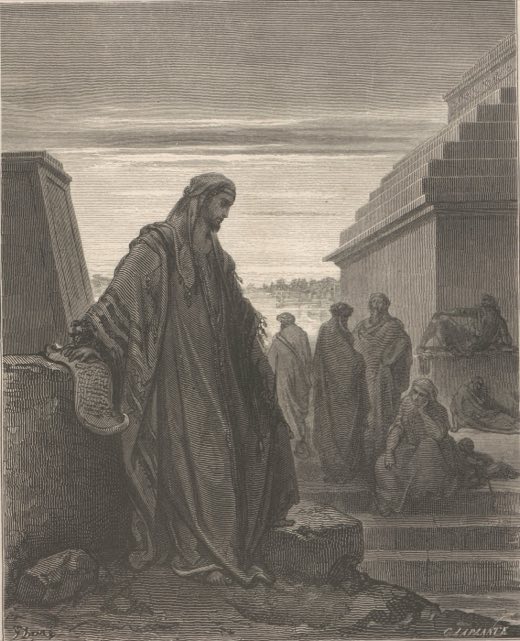 DanielGustave Doré
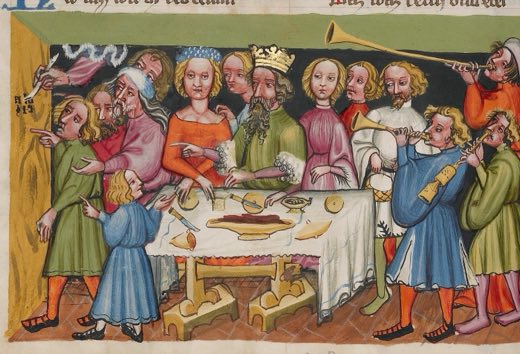 The Writing on the Wall at Belshazzar's Feast (Ms. 33, fol. 214v, from the Weltchronik)Unknown painter, Regensburg
Key verses
young men without blemish, handsome, gifted in all wisdom, knowledgeable, quick to understand, and qualified to serve in the king’s palace—and to teach them the language and literature of the Chaldeans.At once the royal scribes were summoned, and on the twenty-third day of the third month (the month of Sivan), they recorded all of Mordecai’s orders to the Jews and to the satraps, governors, and princes of the 127 provinces from India to Cush—writing to each province in its own script, to every people in their own language, and to the Jews in their own script and language.Thus King Darius ordered a search of the archives stored in the treasury of Babylon. And a scroll was found in the fortress of Ecbatana, in the province of Media, with the following written on it: Memorandum:And in the days of Artaxerxes king of Persia, Bishlam, Mithredath, Tabeel, and the rest of his associates wrote a letter to Artaxerxes. It was written in Aramaic and then translated.See also
- Clay tablets and cuneiformWriting and books
- Darius I the GreatRulers around the Bible
- Sennacherib’s PrismThe Bible in stone
- The Rosetta Stone and the reading of hieroglyphsHow the Bible’s world is studied
- How the Hittites were rediscoveredHow the Bible’s world is studied
- Stargazers of BabylonThe sky of the Bible
Sources: Tyndale Open Bible Dictionary © 2023 Tyndale House Publishers, CC BY-SA 4.0 — adapted and shortened; the original work is available for free at tyndaleopenresources.com · Sources and rights