Encyclopedia › Plants of the Bible
Plants of the Bible
Plane tree
Hebrew ‘armon · KJV “chesnut” · Platanus orientalis · a great shade tree of streams
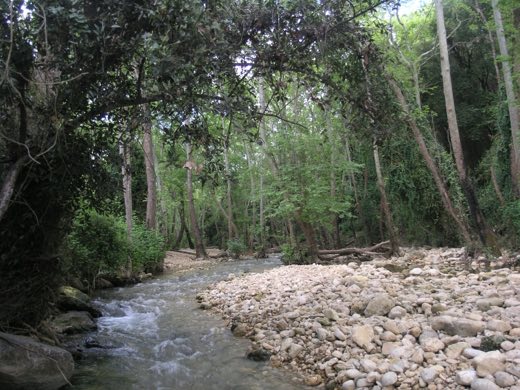
The oriental plane is a massive tree, up to about twenty meters tall in the land of Israel and more elsewhere, with a wide crown of large leaves shaped like an open hand. Its outer bark peels off in patches and strips, leaving a smooth trunk mottled in white, yellow and gray; the Hebrew name ‘armon may come from a word meaning “naked”, after the peeled trunk. Its round, bristly fruits hang on long stalks and break up into seeds with tufts of hair that the wind carries far. It grows along streams, and today it is common in the upper Jordan Valley and in Galilee.
Jacob chose branches of poplar, almond and plane and peeled stripes in their bark “exposing the white inner wood” (Genesis 30:37) — the plane’s bark comes off easily in strips. Ezekiel, describing a great tree in the garden of God, says that the plane trees could not match its boughs. The Greeks, Romans and Persians prized the plane above all as a shade tree, and planted it in public places; older English Bibles call it the chestnut.
In nature
All verses with this plant (2)
Where the Hebrew, Aramaic or Greek word for it stands in the text.
Genesis1
Jacob, however, took fresh branches of poplar, almond, and plane trees, and peeled the bark, exposing the white inner wood of the branches.Ezekiel1
The cedars in the garden of God could not rival it; the cypresses could not compare with its branches, nor the plane trees match its boughs. No tree in the garden of God could compare with its beauty.See also
- Willow and poplarPlants of the Bible
- Lotus plantsPlants of the Bible
- Plant names in old and new BiblesPlants of the Bible
Sources: Tyndale Open Bible Dictionary © 2023 Tyndale House Publishers, CC BY-SA 4.0 — adapted and shortened; the original work is available for free at tyndaleopenresources.com · Plants and Trees in the Bible © United Bible Societies 2025, adapted from R. Koops, Each According to its Kind © 2012 UBS, CC BY-SA 4.0 · Sources and rights