Encyclopedia › Plants of the Bible
Plants of the Bible
Henna
Hebrew kofer · KJV “camphire” · Lawsonia inermis · fragrant flowers and a red dye
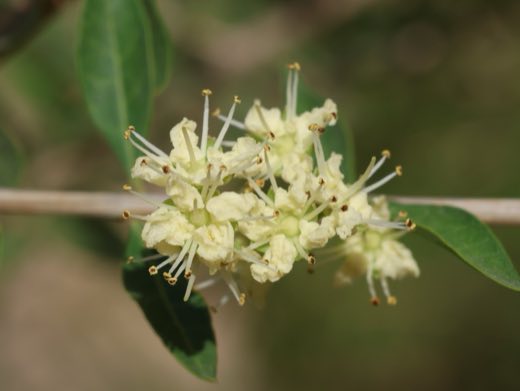
Henna is a shrub, about two to three meters tall, with small opposite leaves and sprays of tiny white or pinkish flowers that smell rather like roses. It grows in hot places — Egypt, Arabia, India — and in Bible times it grew in the oases by the Dead Sea. Its dried leaves, crushed and mixed with water, make a reddish orange paste that has been used since ancient times to color the skin, nails and hair, and some Egyptian mummies have hennaed nails and hair.
The Bible mentions only its flowers. In Song of Songs the bride says that her beloved is “a cluster of henna blossoms in the vineyards of En-gedi” (Song of Songs 1:14) — the spring-fed terraces on the western shore of the Dead Sea, one of the few places in the land warm enough for it. Later the groom pictures his bride as a garden “with henna and nard”. Older English Bibles call the plant camphire. In Song of Songs 7:11 the Hebrew kefarim can mean “villages” or “henna bushes”; some Bibles have “wildflowers”.
In nature
All verses with this plant (2)
Where the Hebrew, Aramaic or Greek word for it stands in the text.
See also
- SpikenardPlants of the Bible
- Plant names in old and new BiblesPlants of the Bible
- Eye paint and cosmeticsTrade, craft and color
- PlacesExplore · How it looked in the 1890s
Sources: Tyndale Open Bible Dictionary © 2023 Tyndale House Publishers, CC BY-SA 4.0 — adapted and shortened; the original work is available for free at tyndaleopenresources.com · Plants and Trees in the Bible © United Bible Societies 2025, adapted from R. Koops, Each According to its Kind © 2012 UBS, CC BY-SA 4.0 · Sources and rights