Encyclopedia › Plants of the Bible
Plants of the Bible
Saffron
Hebrew karkom · Crocus sativus · red threads picked by hand from each flower
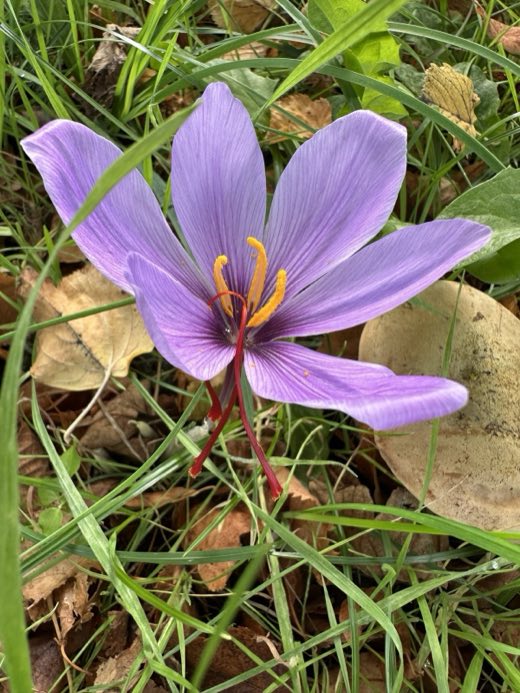
Saffron comes from the saffron crocus, a small plant with grass-like leaves that grows from a bulb and opens purple flowers in the autumn. Each flower has three red threads — the stigmas — which are picked by hand, dried and used as a yellow dye, a spice and a medicine. It takes the threads of many thousands of flowers to make a little saffron, so it has always been one of the most expensive things sold by weight. The plant was grown in Greece, Asia Minor and Persia, and a wall painting on the island of Thera shows women gathering crocus flowers.
Saffron is named only once in the Bible, in the list of costly spices in the imagined garden of Song of Songs 4:14, beside nard, calamus and cinnamon. Most scholars agree that karkom is saffron, but some have suggested turmeric, a yellow root from India, because of its Arabic name kurkum. A different plant, safflower, gave a cheaper yellow and red dye in the ancient world.
In nature
All verses with this plant (1)
Where the Hebrew, Aramaic or Greek word for it stands in the text.
Song of Songs1
with nard and saffron, with calamus and cinnamon, with every kind of frankincense tree, with myrrh and aloes, with all the finest spices.See also
Sources: Tyndale Open Bible Dictionary © 2023 Tyndale House Publishers, CC BY-SA 4.0 — adapted and shortened; the original work is available for free at tyndaleopenresources.com · Plants and Trees in the Bible © United Bible Societies 2025, adapted from R. Koops, Each According to its Kind © 2012 UBS, CC BY-SA 4.0 · Sources and rights