Encyclopedia › Jewish groups and the Roman world
Jewish groups and the Roman world
Provinces and governors
Proconsuls, legates and prefects · Herod’s sons as tetrarchs · Pilate, prefect of Judea AD 26–36
Rome ruled its empire through provinces and through allied kings. The older, peaceful provinces were governed for a year at a time by proconsuls chosen by the Senate — Sergius Paulus in Cyprus (Acts 13:7), Gallio in Achaia (Acts 18:12), whose year is dated by an inscription at Delphi. Provinces with armies, such as Syria, were held by the emperor’s legates, among them Quirinius (Luke 2:2). Judea was first a kingdom under Herod the Great; at his death in 4 BC Augustus divided it among his sons, and Luke lists the rulers of the land about AD 28: Pilate in Judea, Herod Antipas in Galilee, Philip in Ituraea (Luke 3:1).
From AD 6 Judea had a Roman governor of the equestrian order, the second rank of Roman society. An inscription found at Caesarea in 1961 calls Pontius Pilate “prefect of Judea”; later governors such as Felix and Festus were titled procurators. The governor lived at Caesarea on the coast and came up to Jerusalem with troops at the great feasts. He kept order, collected the tribute through local officials and judged capital cases, while daily affairs stayed with the high priest and the council.
In art
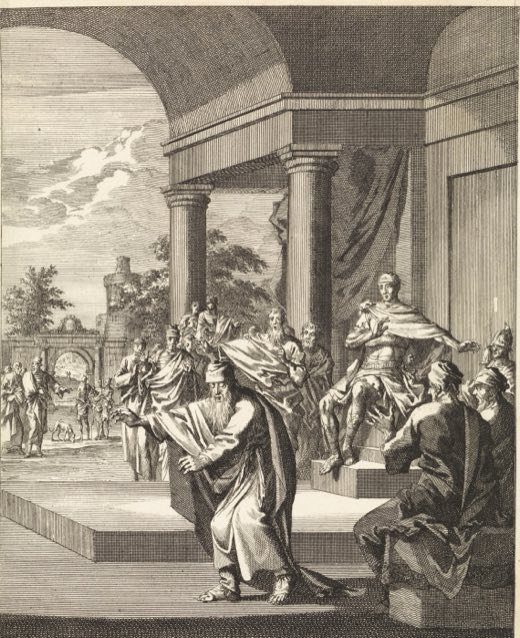 Elymas Struck Blind
See also
- The governor’s court and the appeal to CaesarJewish groups and the Roman world
- The praetorium and the barracksJewish groups and the Roman world
- Tribute and the censusJewish groups and the Roman world
- Gallio InscriptionThe Bible in stone
- HerodiansJewish groups and the Roman world
- The last governors of Judea before the revoltRulers around the Bible
- PilatePeople
- SergiusPeople
- GallioPeople
- QuiriniusPeople
- CaesareaPlaces
Sources: Tyndale Open Bible Dictionary © 2023 Tyndale House Publishers, CC BY-SA 4.0 — adapted and shortened; the original work is available for free at tyndaleopenresources.com · Sources and rights