Encyclopedia › Jewish groups and the Roman world
Jewish groups and the Roman world
Herodians
Named three times, in Mark and Matthew · supporters of Herod’s house · with the Pharisees
The Herodians are named only three times, always beside the Pharisees: in Galilee after a Sabbath healing (Mark 3:6) and in Jerusalem, when together they asked Jesus whether it was right to pay taxes to Caesar (Mark 12:13; Matthew 22:16). Luke and John do not mention them, and no other ancient source uses the word as the Gospels do, so who they were has to be inferred. The name is formed like other Latin party names (Caesariani, “Caesar’s men”) and points to supporters of Herod’s family.
In Galilee that meant Herod Antipas, son of Herod the Great, who ruled Galilee and Perea as tetrarch from 4 BC to AD 39. By one view the Herodians were officials and friends of his court; by another, Jews who wished Herod’s family to rule Judea as well, instead of a Roman governor; some link them with the priestly family of Boethus, whom Herod had raised to the high priesthood. Their place in the tax question fits a party that lived well with Rome. Mark records Jesus’ warning against “the leaven of the Pharisees and of Herod” (Mark 8:15).
In art
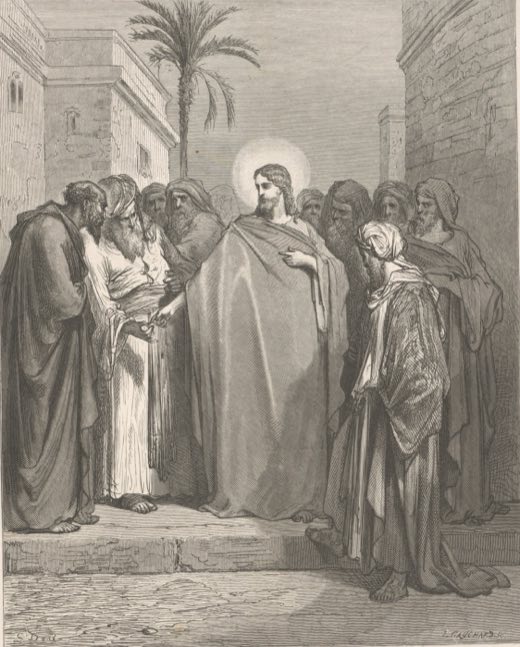 The Tribute Money
See also
- The parties of JudaismJewish groups and the Roman world
- Tribute and the censusJewish groups and the Roman world
- Provinces and governorsJewish groups and the Roman world
- The Way, Nazarenes and ChristiansJewish groups and the Roman world
- HerodPeople
Sources: Tyndale Open Bible Dictionary © 2023 Tyndale House Publishers, CC BY-SA 4.0 — adapted and shortened; the original work is available for free at tyndaleopenresources.com · Sources and rights