Encyclopedia › Jewish groups and the Roman world
Jewish groups and the Roman world
Proselytes and God-fearers
Greek prosēlytos, “one who has come over” · converts and Gentile worshipers of God
Many non-Jews in the Greek and Roman world were drawn to the synagogue, its one God and its Sabbath. Those who became Jews fully were called proselytes, “those who have come over”: by later Jewish sources this meant circumcision for men, immersion in water and an offering at the temple, and from then on the whole Law. Proselytes stood with Jews in the crowd at Pentecost (Acts 2:10–11), and one of the seven chosen to serve in Jerusalem was “Nicolas from Antioch, a convert to Judaism” (Acts 6:5). Josephus tells of a royal family that converted, Queen Helena of Adiabene and her sons, who sent food to Jerusalem in a famine; a tomb north of the Old City identified as her family’s can still be visited.
Others worshiped the God of Israel without becoming Jews. Acts calls them “God-fearing” or “worshipers of God”: the centurion Cornelius, “devout and God-fearing” with all his household (Acts 10:2), and Lydia, a dealer in purple cloth from Thyatira (Acts 16:14). An inscription from Aphrodisias in Asia Minor, of uncertain date, lists the members of a Jewish community in three groups: Jews, proselytes and “God-fearers”.
In art
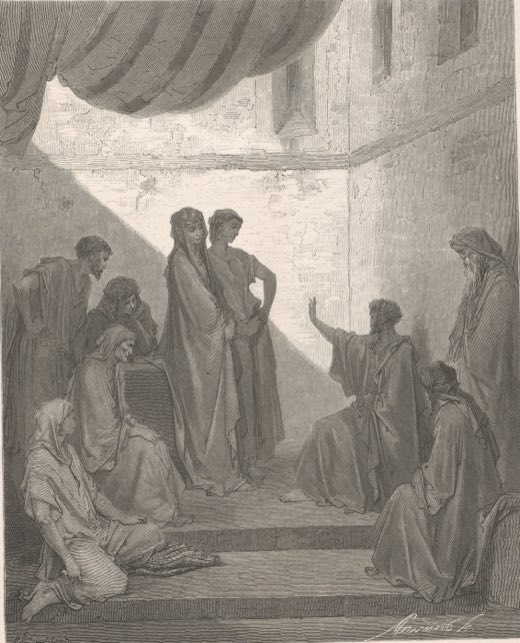 Peter in the House of Cornelius
See also
- Jews abroad: the DiasporaJewish groups and the Roman world
- Synagogue leaders and eldersJewish groups and the Roman world
- “Jew and Greek”The Greek world of Paul
- The Seven and the first deaconsJewish groups and the Roman world
- The council of JerusalemJewish groups and the Roman world
- Circumcision on the eighth dayHuman life in Bible times
- CorneliusPeople
- LydiaPeople
Sources: Tyndale Open Bible Dictionary © 2023 Tyndale House Publishers, CC BY-SA 4.0 — adapted and shortened; the original work is available for free at tyndaleopenresources.com · Sources and rights