Encyclopedia › The Greek world of Paul
The Greek world of Paul
“Jew and Greek”
Greek Hellēn · Greeks at the feast · a Syrophoenician “Greek” · “neither Jew nor Greek”
In the New Testament a “Greek” is often not someone from Greece but any non-Jew of the Greek-speaking world, and “Jew and Greek” together means everyone. Paul writes that the gospel is “the power of God for salvation to everyone who believes, first to the Jew, then to the Greek” (Romans 1:16), that “there is no difference between Jew and Greek” (Romans 10:12) and that “there is neither Jew nor Greek, slave nor free, male nor female, for you are all one in Christ Jesus” (Galatians 3:28). In Ephesus “Jews and Greeks alike” heard the word (Acts 19:10). He sums up the two audiences: “Jews demand signs and Greeks search for wisdom” (1 Corinthians 1:22).
The Gospels show how wide the word was. The woman who begged Jesus to heal her daughter near Tyre “was a Greek woman of Syrophoenician origin” (Mark 7:26): Phoenician by birth, Greek by language and culture. At the last Passover “some Greeks among those who went up to worship at the feast” came to Philip asking, “Sir, we want to see Jesus” (John 12:20–21). Paul’s helpers came from both sides — Timothy had a Jewish mother and a Greek father, and Titus was a Greek. The Greek-speaking Jews of Jerusalem, the Hellenists, are another group again, told under Koine Greek.
In art
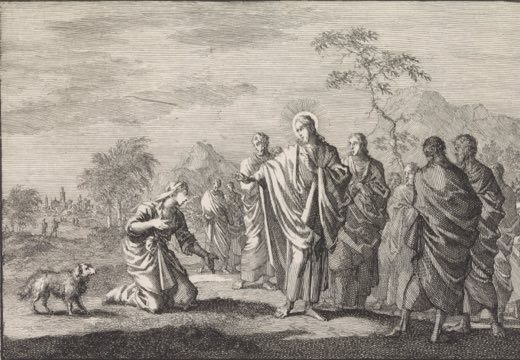 The Canaanite Woman
See also
- GreeksPeoples and gods around Israel
- Koine: the common GreekThe Greek world of Paul
- Proselytes and God-fearersJewish groups and the Roman world
- Jews abroad: the DiasporaJewish groups and the Roman world
- Paul’s companions from the Greek citiesThe Greek world of Paul
- Hebrews and HellenistsJewish groups and the Roman world
- The council of JerusalemJewish groups and the Roman world
- TimothyPeople
- TitusPeople
Sources: Tyndale Open Bible Dictionary © 2023 Tyndale House Publishers, CC BY-SA 4.0 — adapted and shortened; the original work is available for free at tyndaleopenresources.com · Sources and rights