Encyclopedia › The Bible in stone
The Bible in stone
Jehoiachin’s ration tablets
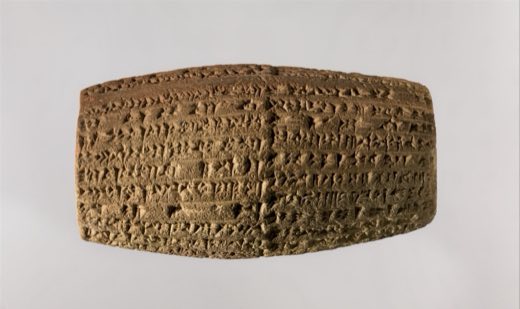
Clay tablets from Nebuchadnezzar’s palace · c. 592 BC · oil for the king of Judah
In their excavations at Babylon from 1899 to 1917, German archaeologists led by Robert Koldewey found some 300 clay tablets in vaulted rooms near the Ishtar Gate. They are lists of the royal storehouse: how much oil, barley and other food was given out to people who lived on the palace — craftsmen, soldiers and captives from many lands, among them Egyptians, Philistines of Ashkelon, Phoenicians, Medes and Greeks. Ernst Weidner published four of them in 1939.
One is dated to Nebuchadnezzar’s thirteenth year, about 592 BC. The tablets list oil for «Yaukin, king of the land of Judah» — the Babylonian form of Jehoiachin — and for his five sons, who were in the care of a man named Qenaiah, and for other men of Judah. Jehoiachin had surrendered in 597 BC and been carried to Babylon (2 Kings 24:12). Here, five years later, he is still called king and is fed from the palace stores.
The books of Kings end with a later scene: in the thirty-seventh year of his exile, the new king Evil-merodach “released King Jehoiachin of Judah from prison”, and “the king provided Jehoiachin a daily portion for the rest of his life” (2 Kings 25:27, 30). The tablets are older than that release and do not describe it; they show the kind of royal allowance that captive kings received at Babylon.
See also
- The Babylonian ChroniclesThe Bible in stone
- Jerusalem taken, 597 BCWeapons and warfare
- Evil-merodach (Amel-Marduk)Rulers around the Bible
- JehoiachinPeople
Sources: Tyndale Open Bible Dictionary © 2023 Tyndale House Publishers, CC BY-SA 4.0 — adapted and shortened; the original work is available for free at tyndaleopenresources.com · Sources and rights