Home › Explore › Scholars disagree › Where did Israel cross the sea?
Where was it?
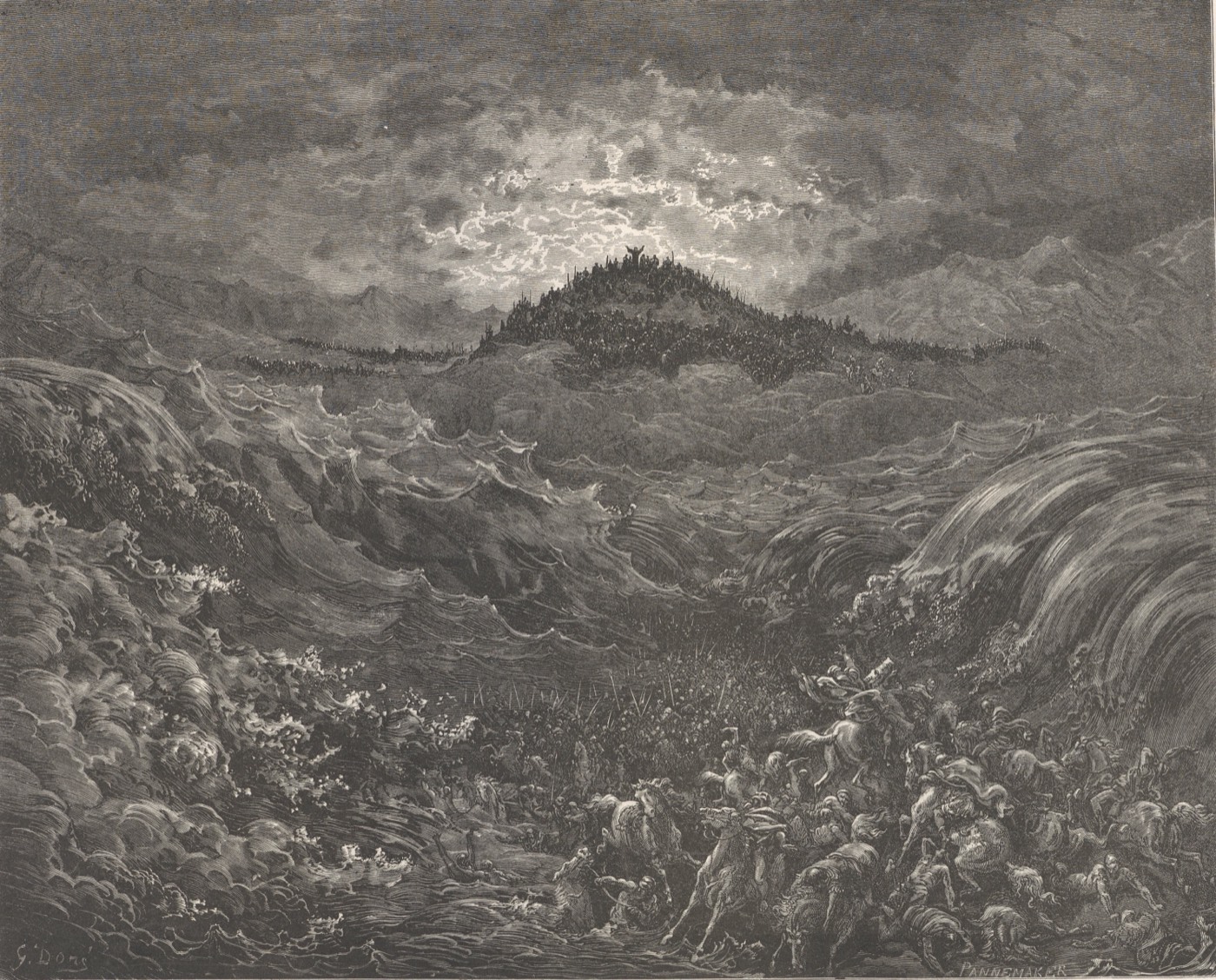
Where did Israel cross the sea?
The Gulf of Suez, the reedy lakes of the isthmus — or the Gulf of Aqaba?
The Hebrew name of the sea is yam suph. The Greek translators of the 3rd century BC called it the Red Sea; ‘suph’ also means reeds. Where Israel camped ‘before Pi-hahiroth, between Migdol and the sea’ is still argued.
What the Bible says
When Pharaoh let the people go, God did not lead them along the road through the land of the Philistines, though it was shorter. For God said, “If the people face war, they might change their minds and return to Egypt.” So God led the people around by the way of the wilderness toward the Red Sea. And the Israelites left the land of Egypt arrayed for battle.“Tell the Israelites to turn back and encamp before Pi-hahiroth, between Migdol and the sea. You are to encamp by the sea, directly opposite Baal-zephon.Then Moses stretched out his hand over the sea, and all that night the LORD drove back the sea with a strong east wind that turned it into dry land. So the waters were divided,Then Moses led Israel from the Red Sea, and they went out into the Desert of Shur. For three days they walked in the desert without finding water.King Solomon also assembled a fleet of ships at Ezion-geber, which is near Eloth in Edom, on the shore of the Red Sea.The proposed sites
The numbers are the views’. No site is marked as the likeliest.
1View 1
The Gulf of Suez
Long tradition, many pilgrims and maps; Bernard Batto (1983) on the name.
- Elsewhere in the Bible yam suph plainly means the Red Sea and its gulfs (1 Kings 9:26); Batto argued it always means the great southern sea.
- From the Delta, the road to the traditional Mount Sinai runs south along the Gulf of Suez.
2View 2
The lakes of the isthmus: ‘the Sea of Reeds’
Many scholars — among them James Hoffmeier.
- Suph means reeds, like the reeds of the Nile where Moses’ basket lay (Exodus 2:3); reeds grow in fresh or brackish lakes, not in the open sea.
- Pi-hahiroth, Migdol and Baal-zephon sound like Egyptian border names, and Egypt’s eastern forts stood along these lakes.
3View 3
The Gulf of Aqaba
Writers who place Mount Sinai in Arabia — Lennart Möller, Robert Cornuke and others.
- 1 Kings 9:26 calls the Gulf of Aqaba yam suph.
- If Sinai lay in Midian, east of the gulf, the crossing would be on the way there; they point to the wide beach at Nuweiba.
What we know for sure
The Bible calls it yam suph; the oldest Greek translation, the Septuagint, rendered it ‘Red Sea’, and so do most translations.
Sources
- James K. Hoffmeier, Israel in Egypt: The Evidence for the Authenticity of the Exodus Tradition (1997)
- Bernard F. Batto, “The Reed Sea: Requiescat in Pace”, Journal of Biblical Literature 102 (1983)
- Graham I. Davies, The Way of the Wilderness (1979)