Encyclopedia › Cities of the Bible
Cities of the Bible
Hazor: the head of the kingdoms
Tel Hazor · about 80 hectares · named in the Mari letters of the 18th century BC
Hazor was by far the largest city of Canaan: an upper city on the mound and, below it, a lower city enclosed by earthen ramparts, together some 80 hectares. Its fame reached far: in the archives of Mari on the Euphrates, of the 18th century BC, it is named again and again — one of very few cities of Canaan there — receiving tin and sending envoys. Fragments of cuneiform tablets found in Hazor itself show its scribes writing in Akkadian.
Excavations led by Yigael Yadin in 1955–1958 and 1968 and by Amnon Ben-Tor from 1990 uncovered Canaanite temples lined with basalt slabs and many basalt statues with their heads and hands deliberately broken off, in the great burning of the 13th century BC. From the time of the kings come a pillared storehouse and a water system: a vertical shaft and a sloping tunnel cut through the rock some 40 metres down to the water table, wide enough for pack animals.
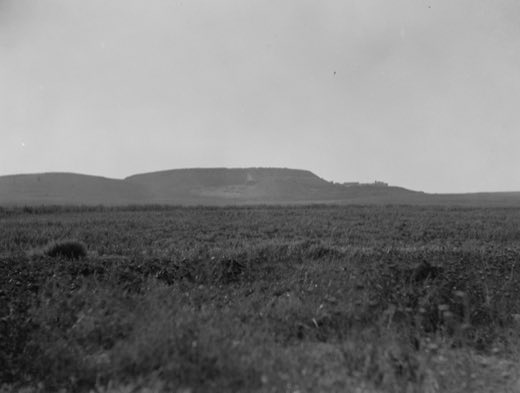
The mound rises above the Hula valley north of the Sea of Galilee.
See also
- Megiddo: the city on the great roadCities of the Bible
- Gezer: a city on the road to the coastCities of the Bible
- Pools and water tunnelsBuildings and structures
- The earthquake of Uzziah’s dayWeather and the forces of nature
- The waters of Merom and the Huleh valleyThe land of the Bible
- Deborah and Barak at the KishonWeapons and warfare
- Hazor, Megiddo and Gezer: Solomon’s building works?Buildings and structures
- Earthquakes in the groundHow the Bible’s world is studied
- Tiglath-pileserPeople
- HazorPlaces
Scholars disagree
Sources: Tyndale Open Bible Dictionary © 2023 Tyndale House Publishers, CC BY-SA 4.0 — adapted and shortened; the original work is available for free at tyndaleopenresources.com · Sources and rights