Encyclopedia › How the Bible was translated around the world
How the Bible was translated around the world
The Ethiopic Bible in Ge’ez
Aksum Christian from the 4th century · translated from Greek, 5th–6th centuries · written left to right
The kingdom of Aksum, in today’s Ethiopia and Eritrea, became Christian in the mid-4th century under King Ezana, whose later coins bear the cross; by the account of the historian Rufinus, a young Syrian named Frumentius brought the faith and became its first bishop. The Bible was translated from Greek into Ge’ez, the language of Aksum, probably in the 5th and 6th centuries; tradition credits monks known as the Nine Saints, who came from the Roman east. Ge’ez is written left to right in a script whose letters change shape to show the vowel.
The Ethiopian Orthodox Church has a broader collection of books than other churches, including 1 Enoch and Jubilees, which survive complete only in Ge’ez. The Garima Gospels, kept at a monastery in Tigray, are among the oldest illustrated Gospel books; their radiocarbon dates point to between the 4th and 7th centuries. Acts tells of an Ethiopian official reading Isaiah in his chariot on the way home from Jerusalem (Acts 8:27–30). Ge’ez is still the language of worship, though people speak Amharic, Tigrinya and other languages.
In art
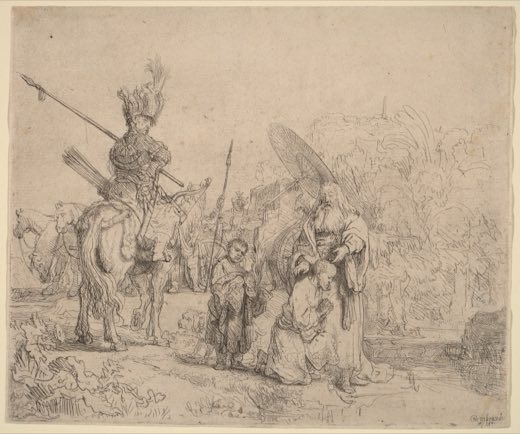 The Baptism of the Eunuch
Key verses
So he started out, and on his way he met an Ethiopian eunuch, a court official in charge of the entire treasury of Candace, queen of the Ethiopians. He had gone to Jerusalem to worship,So Philip ran up and heard the man reading Isaiah the prophet. “Do you understand what you are reading?” Philip asked.Envoys will arrive from Egypt; Cush will stretch out her hands to God.See also
- The Book of EnochAncient texts beside the Bible
- The Coptic BibleHow the Bible was translated around the world
- Right to left, left to rightLanguages of the Bible
- The first Bibles in Africa’s languagesHow the Bible was translated around the world
- Kushites: the people of NubiaPeoples and gods around Israel
- Bible manuscriptsExplore · Gospel books copied and painted by hand from the 9th to the 17th century — Armenian, Greek, Ethiopian, Arabic and Latin. Turn the pages and zoom in.
- CandacePeople
- Philip (Acts)People
Sources: Tyndale Open Bible Dictionary © 2023 Tyndale House Publishers, CC BY-SA 4.0 — adapted and shortened; the original work is available for free at tyndaleopenresources.com · Sources and rights