Encyclopedia › How the Bible was translated around the world
How the Bible was translated around the world
Mesrop Mashtots and the Armenian Bible
An alphabet made about 405 · the first sentence translated, Proverbs 1:2 · first printed Bible, Amsterdam, 1666
Armenia’s king accepted Christianity in the early 4th century, but the Scriptures were read in Greek or Syriac, which most people did not understand. About 405 the monk Mesrop Mashtots, with the support of the head of the church, Sahak, and of King Vramshapuh, made an alphabet for Armenian, of 36 letters. His pupil and biographer Koriun says that the first sentence written in it was the opening of Proverbs: “To know wisdom and instruction, to perceive the words of understanding” (Proverbs 1:2).
Mesrop, Sahak and their pupils translated the whole Bible, first from Syriac and Greek; after 431 they revised it against Greek manuscripts brought from Constantinople. For the beauty and care of its language an 18th-century scholar called it “the queen of the versions”. The first printed Armenian Bible was made in Amsterdam in 1666 by the bishop Voskan Yerevantsi. Ararat, where Genesis says the ark came to rest, is the land the Assyrians called Urartu (2 Kings 19:37), and the mountain is still a symbol of Armenia.
In art
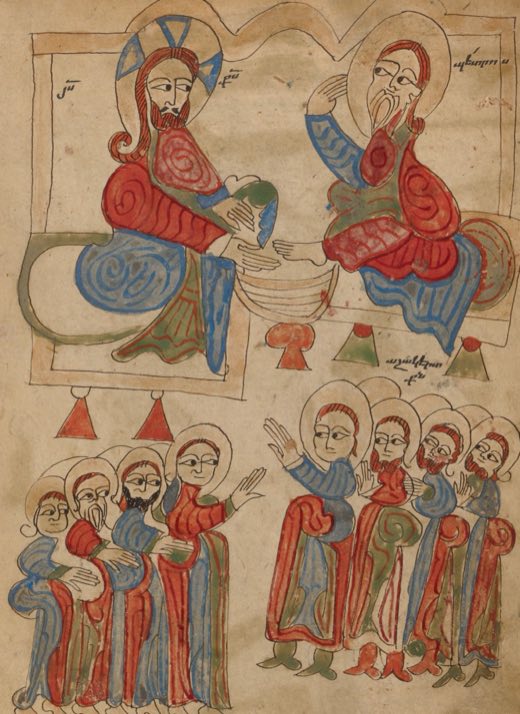 Christ Washing the Apostles' Feet (Ms. Ludwig II 6, fol. 10, from the Gospel Book)Unknown Armenian painter
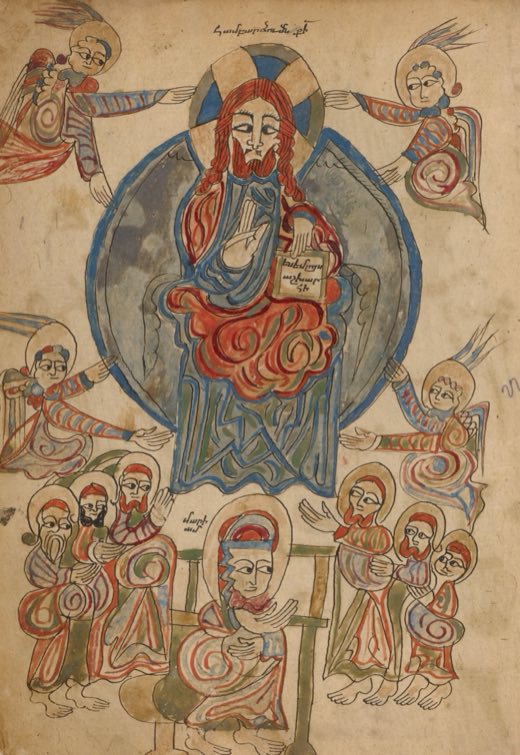 The Ascension (Ms. Ludwig II 6, fol. 12v, from the Gospel Book)Unknown Armenian painter
See also
- The Vulgate and other ancient versionsHow the Bible came to be
- The Georgian BibleHow the Bible was translated around the world
- Wulfila and the Gothic BibleHow the Bible was translated around the world
- AraratPlaces
Sources: Tyndale Open Bible Dictionary © 2023 Tyndale House Publishers, CC BY-SA 4.0 — adapted and shortened; the original work is available for free at tyndaleopenresources.com · Sources and rights