Encyclopedia › The sky of the Bible
The sky of the Bible
Darkness at midday
Three days of darkness in Egypt · three hours at the crucifixion · Passover fell at full moon
Two darknesses in the Bible fall in the daytime. The ninth plague of Egypt came when Moses stretched out his hand toward heaven, “and total darkness covered all the land of Egypt for three days. No one could see anyone else, and for three days no one left his place. Yet all the Israelites had light in their dwellings” (Exodus 10:22–23). In a land whose greatest god was the sun, Ra, the plague struck at the light itself. Some have compared it with the khamsin, the spring dust storm of Egypt that can darken the sky; the text tells only that it was sent by the LORD and that Israel’s homes had light.
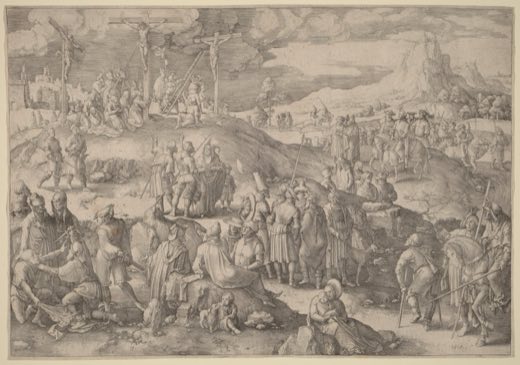
The second came at the crucifixion of Jesus. Matthew, Mark and Luke all tell that “from the sixth hour until the ninth hour darkness came over all the land” (Mark 15:33) — from about noon to three in the afternoon, the hours in which Jesus hung on the cross until He died. Luke adds: “The sun was darkened, and the veil of the temple was torn down the middle” (Luke 23:45). It was not an eclipse of the sun: Passover was kept at the full moon, when the moon is on the far side of the earth from the sun and cannot hide it, and an eclipse never lasts three hours. The Gospels set the darkness beside the words of the prophets: “I will make the sun go down at noon” (Amos 8:9).
See also
- Eclipses and the darkened skyThe sky of the Bible
- The east wind: sirocco and khamsinWeather and the forces of nature
- Morning, noon and evening: the parts of the dayHuman life in Bible times
- Signs from heaven in the Gospels and ActsThe sky of the Bible
- Thallus, Phlegon and the darknessAncient texts beside the Bible
Scholars disagree
Sources: Tyndale Open Bible Dictionary © 2023 Tyndale House Publishers, CC BY-SA 4.0 — adapted and shortened; the original work is available for free at tyndaleopenresources.com · Sources and rights